What Is Automotive HDR Display and How Does It Work
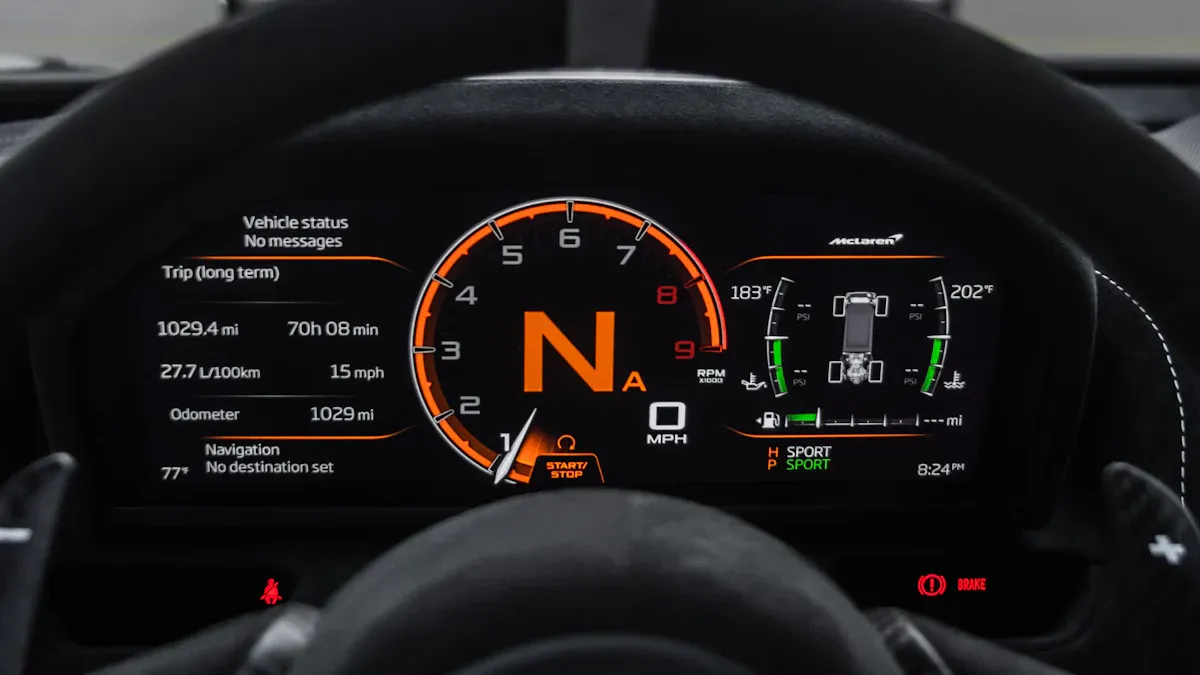
You encounter bright sunlight and deep shadows while driving. Automotive hdr display helps you see both clearly. This display uses hdr technology to mimic your eyes, capturing details in highlights and shadows at the same time. Typical sensors miss some details, but automotive hdr display reaches a dynamic range close to what your eyes can handle. You gain improved visibility and safety, especially in rapidly changing lighting conditions. Unlike standard displays, automotive hdr display gives you a more accurate view, making it easier to spot obstacles and react quickly.
Key Takeaways
Automotive HDR displays enhance visibility by capturing details in both bright and dark areas, improving safety while driving.
High dynamic range technology allows cameras to adapt quickly to changing lighting conditions, ensuring clear images in tunnels and direct sunlight.
Choosing vehicles with HDR features can significantly improve your driving experience by providing sharper visuals and better color accuracy.
HDR displays maintain image quality during rapid lighting changes, helping drivers react faster to obstacles and hazards.
Look for HDR formats like HDR10+ or Dolby Vision when selecting displays for optimal performance and safety.
Automotive HDR Display Overview
What Is High Dynamic Range in Cars
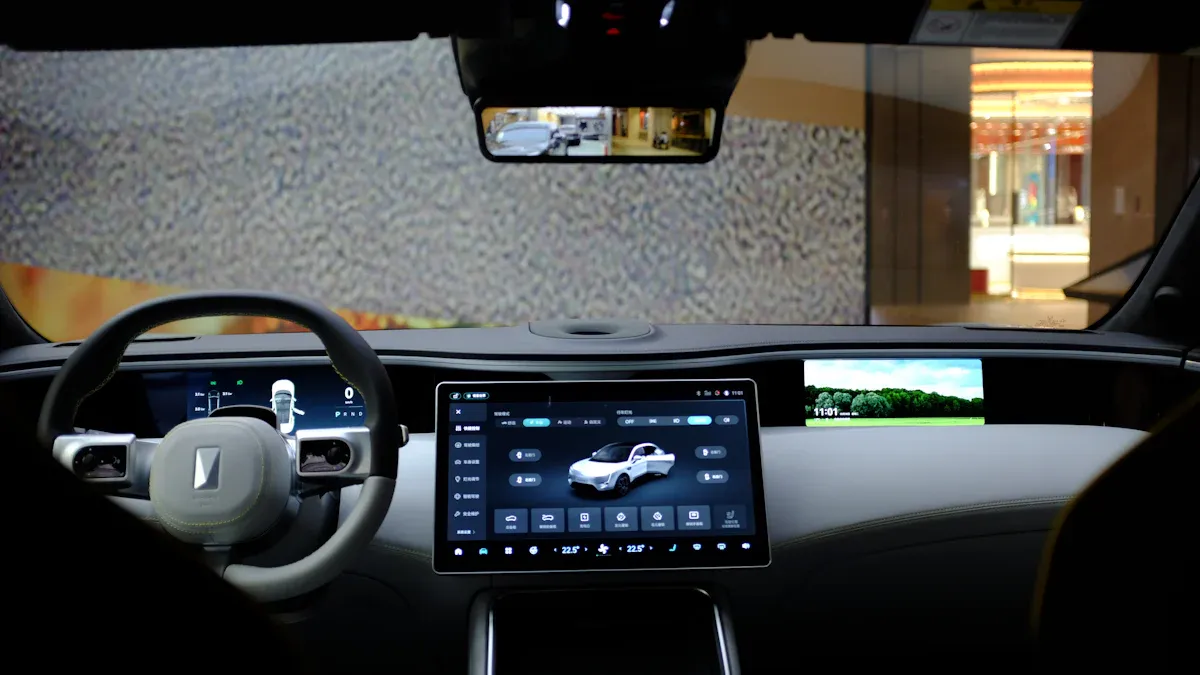
You see the world with your eyes adjusting to both sunlight and shadows. High dynamic range in cars brings this same ability to your vehicle’s cameras and displays. High dynamic range means the system captures details in both the brightest and darkest parts of a scene at the same time. When you drive through a tunnel or face direct sunlight, high dynamic range ensures you do not lose important visual information. Automotive cameras with high dynamic range often reach a dynamic range of at least 120 dB. This level can even surpass the human eye in extreme lighting. High dynamic range technology in vehicles helps you see obstacles, pedestrians, and road signs clearly, no matter the lighting conditions. You benefit from high dynamic range because it improves visibility and accuracy, especially when lighting changes quickly. High dynamic range capability is essential for modern vehicles, especially as advanced driver-assistance systems rely on accurate visuals.
Key Features of Automotive HDR Display
You gain several advantages from automotive hdr display technology. The core components and functions work together to deliver clear images in every driving situation. Here is a quick overview:
Component/Function | Description |
|---|---|
Captures clear images in varying light conditions to enhance visibility and safety in vehicles. | |
Nyxel Near-Infrared Technology | Improves monitoring performance in low light by increasing quantum efficiency at 940nm wavelength. |
On-chip RGB-IR Separation | Reduces load on image signal processor, allowing for more efficient bandwidth usage for other tasks. |
Automotive hdr display uses these features to give you a sharper, more reliable view. You notice the difference when you drive at night or in bright sunlight. The hdr system adapts quickly, so you always see the road ahead. Industry trends show that hdr is becoming more common in vehicles. The demand for high dynamic range grows as drivers expect better visual experiences and as hdr integrates into advanced driver-assistance systems. You also see hdr technology expanding into other fields, such as medical imaging and surveillance, showing its versatility and importance.
Tip: When you choose a vehicle or camera system, look for high dynamic range and hdr features to ensure the best possible visibility and safety.
How HDR Works in Automotive Cameras
HDR Image Capture Technology
You rely on automotive cameras to deliver clear visuals in every driving condition. HDR image capture technology uses advanced sensor designs and image processing algorithms to achieve high dynamic range imaging. Automotive cameras often use multi-shutter speed capture, which means the camera takes several images at different shutter speeds. Each image records a unique range of light intensities. The camera then combines these exposures using sophisticated image processing algorithms. This process creates a high dynamic range output image that mimics your eyes’ ability to see both bright and dark areas at once.
Automotive cameras require significant computational power to process these images quickly. The high dynamic range imaging module must balance performance with power consumption and cost. You benefit from this technology because it enables the camera to handle rapid lighting changes, such as moving from a shaded street into bright sunlight. Automotive cameras must also withstand extreme temperatures, humidity, and vibrations. Manufacturers use specialized materials and thermal management techniques to ensure reliable performance.
You see several methods in action:
Multi-shutter speed capture records multiple exposures for shadows, mid-tones, and highlights.
Image combination merges these exposures into a single high dynamic range image.
Digital Overlap (DOL) records multiple exposures simultaneously, reducing motion blur and artifacts.
Hyperlux sensor families deliver low-light performance and minimal power consumption.
Human eye mimicking allows automotive cameras to perceive a wide range of light intensities.
By enabling a single camera to produce two HDR images with only a negligible gap between captures, this method allows the camera to provide two separate HDR images at different exposures almost simultaneously, enhancing scene understanding.
Split-Pixel and Dual HDR Sensors
You encounter high-contrast scenes every time you drive. Split-pixel HDR technology improves image quality by dividing each sensor pixel into two sub-pixels. This design lets automotive cameras capture both bright and dark areas of a scene at the same time. You notice clearer images with less motion blur, which is vital for object detection and advanced driver assistance systems. Dual HDR sensors take this further by producing two high dynamic range images almost simultaneously. This capability enhances scene understanding and reliability, especially in fast-moving environments.
Automotive cameras use high-bit-depth sensors to maximize data fidelity and visual intelligence. These sensors extend the dynamic range a camera can perceive, giving you clarity in complex visual environments. You depend on this technology for autonomous navigation and real-time safety systems. Automotive cameras with split-pixel and dual HDR sensors stabilize visibility during sudden light transitions. You avoid glare and shadow loss, enjoying balanced exposure for consistent image quality.
Preserving Detail in Bright and Dark Areas
You need automotive cameras that preserve detail in both bright and dark areas. High dynamic range imaging achieves this by merging multiple exposures. Traditional methods like Backlight Compensation (BLC) brighten specific areas but often lose detail elsewhere. True Wide Dynamic Range (WDR), such as DOL-WDR, merges exposures to maintain detail across the entire scene.
Feature | BLC (Backlight Compensation) | True WDR (e.g., DOL-WDR) |
|---|---|---|
How it works | Brightens a specific area, often losing detail in others. | Merges multiple exposures to maintain detail across the entire scene. |
Result for building entrance | Overexposed outside areas, losing detail. | Clear visibility of both inside and outside, preserving details in all areas. |
Use case | Limited to static scenes without bright/dark overlaps. | Ideal for dynamic, high-contrast environments like entrances and parking garages. |
Automotive cameras with high dynamic range imaging modules improve visibility in challenging conditions such as bright sunlight and fog. You rely on these sensors for safety systems and driver assistance. High dynamic range imaging stabilizes visibility during sudden light transitions. You avoid glare and shadow loss, gaining balanced exposure for consistent image quality. Automotive cameras maximize data fidelity and visual intelligence, ensuring accurate interpretation of surroundings.
You benefit from high dynamic range imaging because it preserves detail, enhances clarity, and improves reliability. Automotive cameras use advanced sensor designs and image processing algorithms to deliver high dynamic range imaging. You experience safer driving, better object detection, and improved performance in every lighting condition.
HDR vs Standard Displays
Differences in Image Quality
You notice a clear difference in image quality when you compare hdr displays to standard displays. Hdr technology gives you sharper visuals and richer colors. High dynamic range lets you see details in both bright and dark areas. Standard displays often lose detail in shadows or highlights. You benefit from hdr because it keeps image quality consistent, even when lighting changes. Hdr displays use advanced sensors and processing to deliver high dynamic range images. You see road signs, pedestrians, and obstacles more clearly. Standard displays struggle to show accurate colors and fine details. Hdr displays maintain high dynamic range and image quality in every situation.
Performance in Changing Lighting
You experience rapid lighting changes while driving. Hdr displays adjust brightness and color accuracy dynamically. Standard displays use fixed brightness and often wash out in sunlight. You get high dynamic range performance with hdr, so you see clear images in tunnels, under bridges, or in direct sunlight. Hdr displays hold up under tough conditions. You can check the table below to see how hdr compares to standard displays:
Feature | HDR Displays | Standard Displays |
|---|---|---|
Brightness Adjustment | Dynamic adjustment based on ambient light | Fixed brightness |
Color Accuracy | High fidelity across lighting conditions | Limited accuracy |
Certification | HDR10+ Automotive certified | Not certified |
Performance in Sunlight | Maintains quality under direct sunlight | Often washed out |
Viewing Angles | Consistent across various angles | Limited viewing angles |
Hdr displays give you high dynamic range and image quality across all lighting conditions. You avoid glare and shadow loss. Standard displays cannot match this performance.
Tip: You get safer driving and better visibility with hdr displays because they adapt to changing light.
Why HDR Is Better for Automotive Use
You rely on hdr for high dynamic range and image quality in your vehicle. Hdr displays help you react faster to hazards. You see accurate colors and sharp details, which improves your safety. Standard displays limit your view and make it harder to spot obstacles. Hdr displays support advanced driver-assistance systems. You gain confidence when driving at night or in bright sunlight. High dynamic range technology gives you a clear advantage. You enjoy consistent image quality and reliable performance. Hdr displays make your driving experience safer and more comfortable.
Challenges Solved by Automotive HDR Display
Glare and Shadows
You face glare and deep shadows every time you drive, especially during sunrise or sunset. HDR technology helps you see clearly by balancing exposure levels. The STARVIS 2 sensor stands out in high-contrast situations. It adjusts brightness so you do not lose details in bright or dark areas. This feature improves visibility in shadowed regions. You notice the difference when passing streetlights or moving from bright to dark environments. HDR ensures clarity in footage, which is essential for traffic monitoring and safe driving. You avoid missing important information because the display preserves details across the entire scene.
Rapid Lighting Changes
You experience rapid lighting changes when you drive through tunnels or under bridges. HDR displays respond quickly to these shifts. They achieve peak brightness levels of 1000 nits or more, much higher than standard displays. This capability allows HDR to handle extreme lighting conditions and provide better contrast and detail in highlights. You benefit from high dynamic range because it maintains image quality even when lighting changes suddenly. Traffic monitoring systems rely on HDR to capture clear visuals during these transitions. You can see the comparison below:
Display Type | Peak Brightness (nits) | Dynamic Range (stops) |
|---|---|---|
SDR | 200-400 | 8 |
HDR | 1000+ | 12-14 |
HDR displays adapt to changing light faster than standard displays.
You see more detail in both bright and dark areas.
Real-World Driving Scenarios
You encounter many situations where HDR makes a difference. Nighttime driving becomes safer because HDR preserves shadow and highlight detail. You avoid motion artifacts when transitioning from dark to bright areas. HDR captures details in both bright headlights and dark roads, preventing loss of important information. True HDR performance helps you differentiate between critical events and ordinary occurrences, especially during evidence collection at night. You see the advantages in traffic monitoring and everyday driving.
Scenario | Advantage |
|---|---|
Nighttime driving | Preserves shadow and highlight detail where conventional cameras fall short. |
Sudden transitions from dark to bright | Maintains clarity even when both the camera and scene are in motion, avoiding motion artifacts. |
Night driving with bright headlights | Captures details in both bright and dark areas simultaneously, preventing loss of important information. |
Evidence collection at night | True HDR performance can differentiate between critical events and mere occurrences, enhancing safety. |
Tip: You improve your safety and visibility by choosing HDR displays for your vehicle. These displays solve common challenges in extreme lighting conditions and support reliable traffic monitoring.
Benefits of HDR for Drivers and Safety
Enhanced Visibility and Color Accuracy
You depend on hdr to deliver clear visual information in every driving situation. Hdr technology gives your camera the ability to capture a wider spectrum of brightness levels. This means you see more detail in both low light and bright sunlight. Hdr expands the visible contrast, so you notice greater detail in dark and bright regions. You also benefit from improved color accuracy. Hdr renders images with a wider range of colors, making scenes look more realistic. This helps you distinguish objects and road signs quickly. The table below shows how hdr enhances visibility and color accuracy:
Aspect | Description |
|---|---|
Brightness Levels | Hdr allows for a wider spectrum of brightness, improving visibility in low light and bright conditions. |
Contrast | Hdr expands visible contrast, providing greater detail in both dark and bright regions. |
Color Accuracy | Hdr renders images in a wider range of colors, helping you identify objects and signs. |
Detail Preservation | Hdr maintains detail in highlights and shadows, essential for safe driving in varying light. |
Realism | Hdr preserves detail across bright and dark areas, enhancing your perception of the environment. |
Improved Reaction Time and Safety
You gain enhanced safety when your camera uses hdr. Hdr analyzes light levels in each scene, preserving detail across varying brightness. Unlike standard cameras, hdr does not clip bright areas or crush darker regions. You see important details in all lighting scenarios. This clarity improves your reaction time. When you transition from tunnels to sunlight, hdr dynamically adjusts to changing light intensities. You avoid oversaturation and loss of detail. Hdr provides stable visuals during sudden lighting transitions, so you maintain lane and road visibility. You react faster to hazards because you always see a clear image.
Practical Advantages in Everyday Driving
Hdr gives you practical advantages every day. Your camera adapts to rapid lighting changes, such as entering a tunnel or facing direct sunlight. Hdr technology preserves details in both bright and dark areas. You avoid missing critical information. Hdr enables consistent lane-level vehicle detection, even at varying speeds and lighting conditions. You experience clear visual information in all environments. Hdr supports advanced driver-assistance systems, making your drive safer and more comfortable. You rely on hdr for accurate object detection and improved performance. Hdr ensures you see the road ahead with confidence.
Evaluating Automotive HDR Displays
Key Features to Consider
You want to make sure your hdr display meets high standards for performance and reliability. Start by checking the hdr format. Common options include HDR10, Dolby Vision, HDR10+, and HLG. Each format offers unique characteristics, such as static or dynamic metadata and compatibility with different devices. You can see the differences in the table below:
HDR Format | Characteristics | Relevance |
|---|---|---|
HDR10 | Open standard, static metadata | Most common in consumer devices |
Dolby Vision | Dynamic metadata, scene optimization | Premium displays and streaming |
HDR10+ | Dynamic metadata, competitor to Dolby Vision | Increasing support in TVs |
HLG | Backward compatible, used in broadcast | Some TV models support |
You should also look for peak brightness and color gamut fidelity. OLED panels achieve high peak luminance per pixel, while LCDs depend on backlight and local dimming. Proper calibration ensures wide color gamuts like DCI-P3 and BT.2020 display accurately. Tone mapping adjusts the hdr signal to the panel’s capabilities. You want minimal tone mapping to see the native panel response.
When you evaluate an hdr display for your vehicle, consider features that handle rapidly changing lighting, enable accurate object detection, and improve visibility. Reliable input for advanced driver-assistance systems depends on consistent, high-quality images. A dynamic range measurement of at least 120 dB is recommended for effective hdr performance.
Tip: Early prototyping, firmware development, and ongoing quality control help ensure your hdr display delivers consistent results.
Choosing the Right HDR Camera for Your Vehicle
You need a camera that works well with your hdr display. Look for image quality with resolutions like 1080p, 2K, or 4K. Low light performance matters, so choose a camera with infrared capabilities or LED lights. Storage compatibility is important; make sure your camera supports microSD cards and loop recording. Lens specifications affect performance. A wide aperture improves low-light recording, and a broad field of view captures more of the scene.
You want hdr and WDR functions to manage varying light conditions. These features help your camera deliver better exposure and clarity. Reliable performance in extreme lighting ensures you see lane markings, road signs, and obstacles. Consistent input supports advanced driver-assistance systems and autonomous driving.
Note: When you select a camera, check for compatibility with your hdr display and make sure it meets your needs for visibility and safety.
You see how hdr transforms your driving experience by improving safety and visibility. Hdr gives you clearer images in high-contrast scenes and reduces glare from headlights. You notice faces and objects more easily in varying light. Hdr ensures optimal exposure, preventing overexposure and maintaining visibility in both bright and dark areas.
Aspect | Description |
|---|---|
Dynamic Range | Hdr captures more light, helping you see clearly in changing conditions. |
Bright and Dark Areas | Hdr keeps both bright and dark regions visible, making navigation safer. |
Optimal Exposure | Hdr balances exposure, so you avoid losing detail in extreme lighting. |
Hdr helps you see through doorways and windows with improved clarity.
Hdr enhances visibility of objects and faces in tough lighting.
Hdr reduces glare from reflective surfaces.
When you select automotive cameras or displays, you should prioritize models with hdr features. Hdr captures more detail in bright and dark areas, which is vital for safe driving in challenging conditions.
FAQ
What does HDR mean in automotive displays?
HDR stands for High Dynamic Range. You see more detail in both bright and dark areas. This technology helps you view clear images in tough lighting conditions, such as tunnels or direct sunlight.
How does HDR improve driving safety?
You get better visibility with HDR. The display shows obstacles, road signs, and pedestrians more clearly. This helps you react faster and avoid accidents.
Can you use HDR cameras in all vehicles?
Yes, you can install HDR cameras in most vehicles. You should check compatibility with your car’s display system before buying. Many modern cars support HDR technology.
What features should you look for in an automotive HDR display?
Feature | Why It Matters |
|---|---|
High brightness | Improves visibility in sunlight |
Wide color range | Shows realistic images |
Fast response | Handles quick light changes |
Tip: Choose displays with HDR10+ or Dolby Vision for the best results.
See Also
Understanding HDR Technology: Its Functionality Explained
Innovations in Touch Screen Technology for Car Decks in 2025
Comparing HDR10 And Dolby Vision: Best Picture Quality 2025