Tracing the Journey of E-Paper Technology
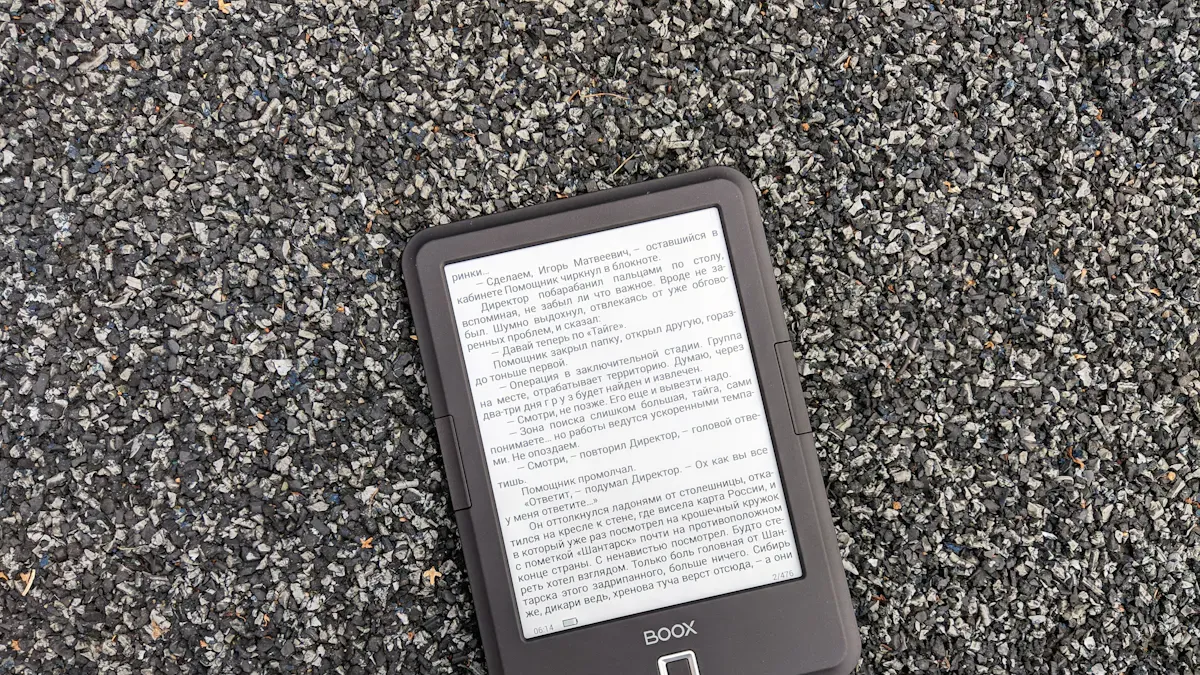
You see e-paper everywhere, from e-readers to digital signs. E-paper, also called epaper, uses unique technology to mimic the look of ink on paper. This digital display stands out because it reduces eye strain and saves energy. Stores using e-paper for pricing have saved 40% more energy over five years and cut paper waste. E-paper supports sustainability by using less power than a smartphone on standby and lowering pollution. Its evolution shapes how you read, shop, and interact with information.
Key Takeaways
E-paper mimics real paper, reducing eye strain and saving energy, making it ideal for reading and signage.
E-paper technology supports sustainability by using less power and cutting down on paper waste in various industries.
Recent innovations in e-paper include color displays and flexible designs, enhancing user experience and interaction.
E-paper is becoming more common in smart devices, allowing for real-time updates and a more efficient interface.
The future of e-paper looks bright with advancements in color clarity, flexibility, and AI integration, promising to transform daily life.
What Is E-Paper
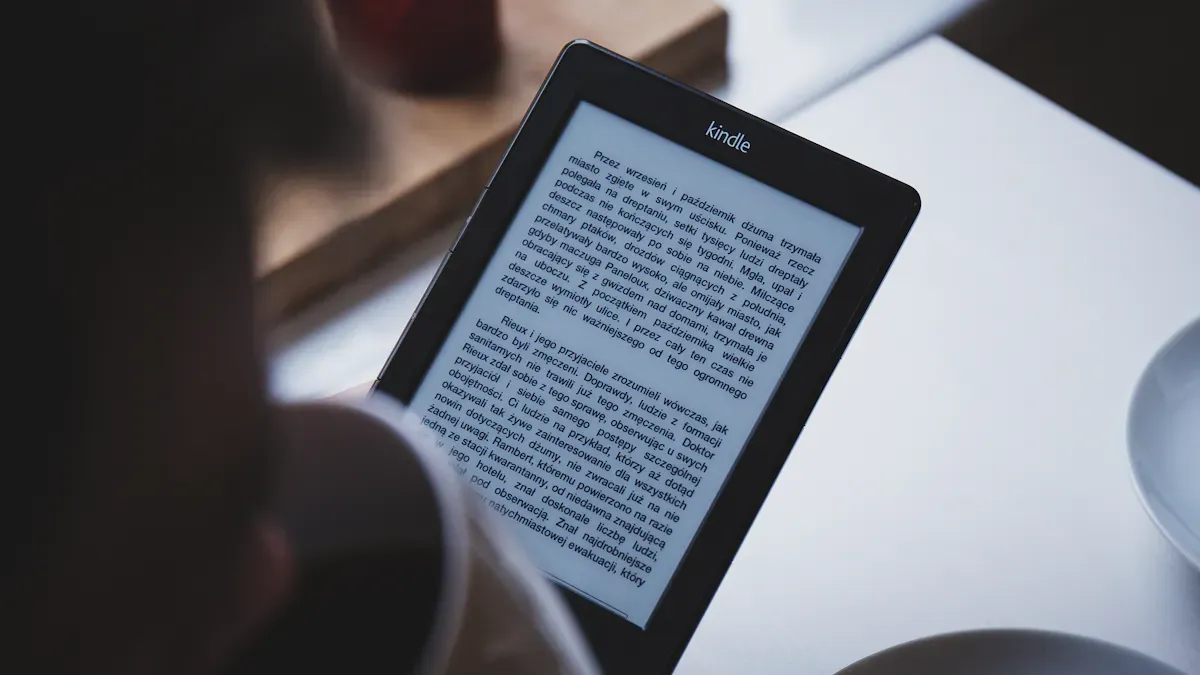
E-Paper Defined
You may have seen digital paper in e-readers or smart labels. E-paper, also called epaper, is a display technology that looks and feels like real paper. This technology uses tiny capsules filled with black and white particles. When you turn on a device with epaper technology, these particles move to create text and images. You get a screen that does not glow like a phone or tablet. Instead, it reflects light, just like a printed page.
Key Features
Epaper technology stands out from other digital displays. You can see the main differences in the table below:
Feature | E-paper | LCD |
|---|---|---|
Thickness | About 1 mm | Approximately 7 mm |
Readability in Sunlight | Easily readable | Difficult to read |
Power Requirements | Holds content without power | Requires power to hold images |
View Angle | 180 degrees | Best viewed from center front |
Pixel Visibility | Uses reflection | Uses backlight illumination |
You will notice several benefits when you use digital paper:
Eye comfort: You avoid blue light, so your eyes feel less tired.
Low power use: You can read for weeks on a single charge.
Sunlight readability: You see the screen clearly, even outside.
Paper-like experience: You get high contrast and a matte finish.
Why It Matters
Epaper technology changes how you interact with digital information. You see it in e-readers, smartwatches, and even store signs. Retailers use digital paper for price tags and signs, saving energy and making updates easy. Warehouses use epaper labels to track inventory in real time. Publishers reach more readers and save money by using epaper instead of print. You benefit from longer battery life, less eye strain, and a more natural reading experience. E-paper helps reduce waste and supports a greener future.
E-Paper Milestones
MIT Origins
You can trace the roots of epaper back to the 1990s at MIT. Researchers wanted to create a display that looked and felt like real paper. They called their invention "intelligent paper." The team developed electronic ink, which used microcapsules filled with charged particles. When you applied an electric field, the particles moved to form letters and images. This early technology set the stage for future digital displays. You saw the first prototypes in labs, but the idea quickly gained attention. The goal was to make screens that used less power and offered a comfortable reading experience.
Commercial Breakthroughs
You witnessed the first big leap in epaper when Amazon launched the Kindle in 2007. The Kindle made digital reading popular and showed how epaper could change the way you read books. Businesses started using epaper for price tags and signs. In 2025, Samsung introduced a 32-inch Color E-Paper display. This new technology gave companies a sustainable alternative to traditional paper signage. You saw several benefits:
Businesses reduced printing and energy costs.
Digital ink displays needed no power to keep static images, which helped large signage networks.
Companies met sustainability goals by cutting operational costs and carbon emissions.
The 13-inch Color E-Paper lowered manufacturing carbon emissions by 40% compared to traditional materials.
Displays operated with zero power for static content, saving energy.
Samsung's software made content management easy and efficient.
The displays targeted sectors with heavy use of traditional signage, promoting a shift to digital solutions.
Companies found these displays cost-effective and environmentally friendly.
Samsung maintained a strong share in the global digital signage market.
You saw epaper move from small e-readers to large, flexible, and colorful displays. This shift helped businesses and consumers save money and protect the environment.
Recent Innovations
You have seen rapid changes in e-paper technology since 2020. New designs and features make these displays more useful and interactive. The table below shows some of the most important innovations:
Innovation Type | Description |
|---|---|
Smart Integration | E-paper displays now work with AI and IoT, making smart devices more powerful. |
Interactivity | Touch screens let you tap and swipe, improving user interaction. |
Color Displays | Color e-paper increases reading speed and makes information easier to find. |
Flexible Designs | Flexible screens bend or roll, fitting many new uses. |
Faster Refresh Rates | Screens refresh at 75 Hz, making updates smoother and reducing ghosting. |
You notice that color e-paper improves reading speed and helps you find information quickly. Good lighting makes colors brighter and easier to read. Using color displays can even boost your mood and make your experience better. You also see retina e-paper technology reach ultra-high resolutions over 25,000 PPI, which is higher than what your eyes can see. Power consumption has dropped to around 1.7 mW/cm² for video and 0.5 mW/cm² for static images, much lower than other display types. Refresh rates now exceed 25 Hz, which is ten times faster than older devices.
The pace of development has been steady but slow compared to other display technologies. You see more public interaction with epaper as it becomes part of daily life. Businesses and consumers benefit from improved displays, lower energy use, and new ways to interact with information.
How E-Paper Works
Simple Explanation
You interact with electronic paper every time you use an e-reader or see a digital sign in a store. Epaper works differently from your phone or computer screen. Instead of shining light into your eyes, it reflects the light around you. This makes reading comfortable, even in bright sunlight. When you turn a page or update an image, the display uses a small amount of energy. The image stays on the screen without using more power. You can leave a message or a picture on an e-paper display for days, and it will not fade or disappear.
Tip: E-paper does not use a backlight. You can read it easily outdoors or in a well-lit room.
Core Technology
You find several types of technology behind e-paper displays. Each one has unique features that make it useful for different tasks.
Technology Type | Characteristics |
|---|---|
Electrophoretic Displays (EPD) | Bistable, low power, high contrast, commonly used in e-paper applications. |
Electrowetting Displays | Faster refresh rates, vibrant colors, suitable for video content by manipulating colored oil films. |
Electrofluidic Displays | High brightness and color saturation through reflective pigments in microfluidic cells. |
Cholesteric Liquid Crystal Displays | Reflects ambient light, ultra-low power consumption, full color passive displays, lower contrast. |
You see electrophoretic displays most often in e-readers. These screens use tiny capsules filled with black and white particles. Electrowetting and electrofluidic displays create high-quality color and faster updates. Cholesteric liquid crystal displays offer full color displays with very low power use. All these types use ambient light and keep images visible without constant power.
E-Paper vs. Other Displays
You might wonder how e-paper compares to LCD or OLED screens. E-paper stands out for its energy savings and readability.
Display Type | Power Consumption |
|---|---|
E-Paper | Less than 1mW for text, zero for static images |
LCD | 100-400mW |
OLED | 50-300mW |
E-paper uses less energy than LCD or OLED screens.
You can read e-paper in bright sunlight without glare.
LCD and OLED offer faster refresh rates and better video, but they drain batteries faster.
E-paper works best for reading, signs, and any place you need clear text or color displays that last.
You get a display that saves power, protects your eyes, and supports a greener world.
E-Paper Applications
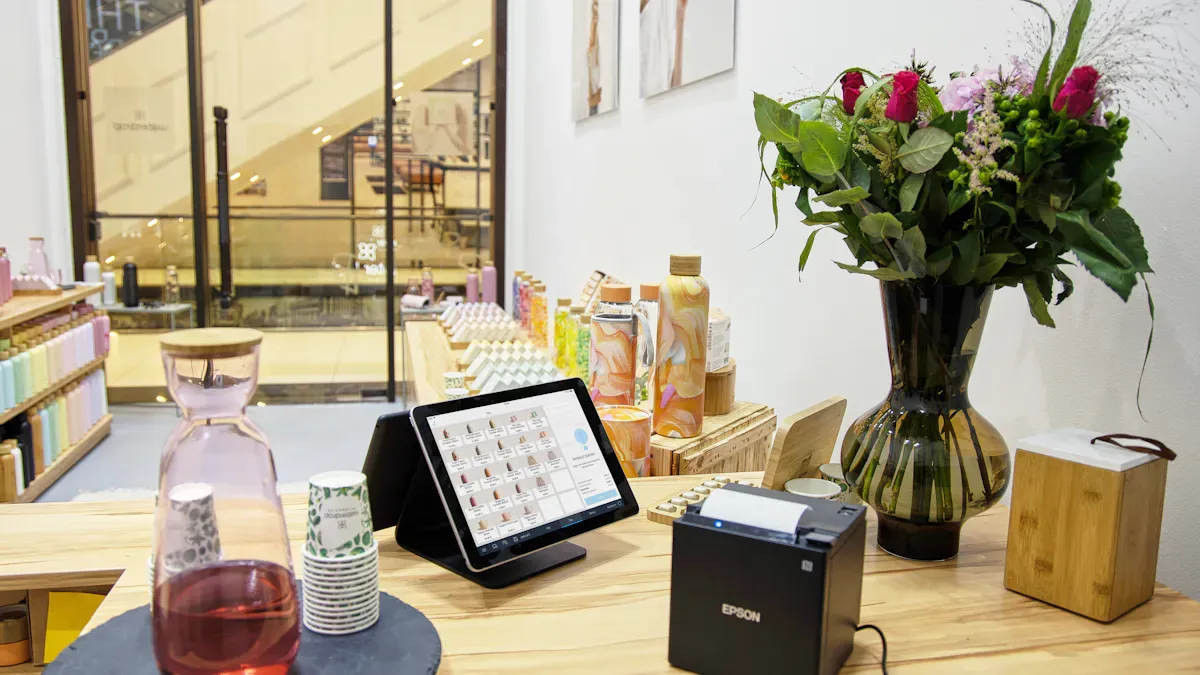
E-Readers & Signage
You see digital paper everywhere, especially in e-readers and store signs. E-readers use epaper displays to give you a comfortable reading experience. Amazon released new Kindle models with color screens, making reading more enjoyable and easier on your eyes. Stores like Walmart use electronic shelf labels powered by digital paper. These labels help staff update prices quickly and reduce waste. You also notice variable-color e-paper displays in billboards and even luxury handbags. This technology brings vibrant colors to large signs and unique products.
Application Area | Description |
|---|---|
E-Readers | Amazon launched color Kindle models, improving display quality and user experience. |
Digital Signage | Walmart uses electronic shelf labels, showing a shift to smart retail solutions. |
Variable-Color E-Paper | Nearing commercialization for billboards and luxury items like handbags. |
Note: Digital paper displays save energy and make information easy to update.
Smart Devices
You use smart devices every day. E-paper technology makes these devices more efficient and user-friendly. Samsung E-Paper lets you change content in real time with a mobile app. The EMDX series holds its image for up to 199 days after a full charge. You get a slim design that feels like paper, only 0.7 inches thick. Fast updates improve your experience, and digital paper matches the elegance of traditional paper.
Feature | Description |
|---|---|
Real-time updates | Samsung E-Paper allows quick changes via a mobile app. |
Long-lasting display | EMDX series keeps images for 199 days after charging. |
Slim design | EMDX series offers a paper-like feel with a depth of 0.7 inches. |
Partial updates make digital paper displays faster and more responsive.
E-paper technology gives you a simple and elegant interface.
Market Leaders
You see several companies leading the way in digital paper technology. Amazon, Samsung, and E Ink drive innovation in e-paper displays. These companies focus on green solutions and user-friendly products. Advancements in color accuracy, refresh rates, and energy efficiency push the market forward. Automated workflows use digital paper to share information in real time. Companies choose eco-friendly materials and scalable production methods to meet sustainability goals.
Trend | Description |
|---|---|
Better color, faster refresh rates, and improved energy efficiency. | |
Integration with Automation | E-paper displays support automated workflows for real-time updates. |
Focus on Sustainability | Companies use eco-friendly materials and scalable production methods. |
Tip: You benefit from greener products and easier access to information as digital paper technology evolves.
Future Of E-Paper
Emerging Trends
You will see many exciting changes in digital paper by 2026. New displays will show bright colors and clear text using advanced methods like Mie scattering. Flexible and foldable screens will appear in notebooks, laptops, and even wearables. These improvements will make digital paper more useful in your daily life. The table below shows some of the main trends shaping the future:
Trend | Description |
|---|---|
Full-color screens with bright images and clear text using new technologies. | |
Flexible and Foldable Displays | E-paper expands into notebooks, laptops, signage, and wearables. |
Energy-efficient Solutions | Displays use less power, saving energy and money. |
Increased Adoption | More use in retail, healthcare, and transportation for digital signage. |
You will also notice more energy-efficient solutions. These displays will help you save power and lower costs. Digital paper will become common in many places, from smart walls to e-paper keyboards.
Industry Impact
You will see artificial intelligence change how you use digital paper. In smart retail, AI-powered displays will suggest products based on your location or loyalty data. Menu boards in restaurants will change their recommendations depending on the time of day or weather. AI will also add games and quizzes to engage you while you shop. As businesses invest in AI, you will experience more personalized and efficient services. The market for digital paper is growing fast. Experts predict it will reach over 41 billion dollars by 2026, with strong growth for the next ten years.
Note: Digital paper will play a bigger role in education, smart devices, and even newspapers that refresh themselves.
Challenges Ahead
You may face some challenges as this technology grows. Flexible displays and color e-paper need better durability and lower costs. Some industries need faster refresh rates for video and animation. You might see slow adoption in areas where people still prefer traditional screens. Companies must also improve recycling and eco-friendly materials to keep digital paper green. As you look to the future, you will see new uses like smart walls that show art or messages, and e-paper keyboards that change with each task. The journey of epaper will continue to shape how you read, work, and interact with digital information.
You have seen epaper evolve from early prototypes to advanced displays that shape your digital world. This technology gives you a paper-like reading experience, supports sustainability by saving energy, and drives innovation in many industries. Ongoing research brings flexible screens, AI integration, and better color.
Key Takeaway | Description |
|---|---|
Future Focus | Stay curious and follow updates from industry leaders to see how e-paper will transform your daily life. |
FAQ
What makes e-paper different from LCD screens?
You see e-paper reflect light like real paper. LCD screens use backlights and show images with pixels. E-paper saves energy and stays readable in sunlight. LCD screens work better for video but drain batteries faster.
Can you use e-paper for video?
You can use e-paper for simple animations or slow video. Most e-paper screens refresh slowly. LCD and OLED screens handle fast video much better. E-paper works best for reading and static images.
How long does an e-paper display last?
You get a display that holds images for weeks without power. E-paper screens last years with normal use. You see less wear because the technology uses low energy and does not heat up.
Is e-paper safe for your eyes?
You avoid blue light with e-paper. The display reflects ambient light, so your eyes feel less tired. You can read for hours without discomfort. E-paper helps you protect your vision.
Which devices use e-paper technology?
You find e-paper in e-readers, smartwatches, store signs, and electronic shelf labels. Some laptops and tablets use e-paper for secondary screens. You see more devices adopt e-paper as the technology improves.
See Also
Discovering BOE's Cutting-Edge Display Tech Innovations for 2025
2025 LCD Screens: Innovations Enhancing Clarity And Efficiency
An Introductory Guide For Newcomers To Display Technology
Unraveling The Science Of Naked Eye 3D Displays
Simplifying LED Display Software For Beginners And New Users