The Evolution of Smartphone Displays from OLED to HMO
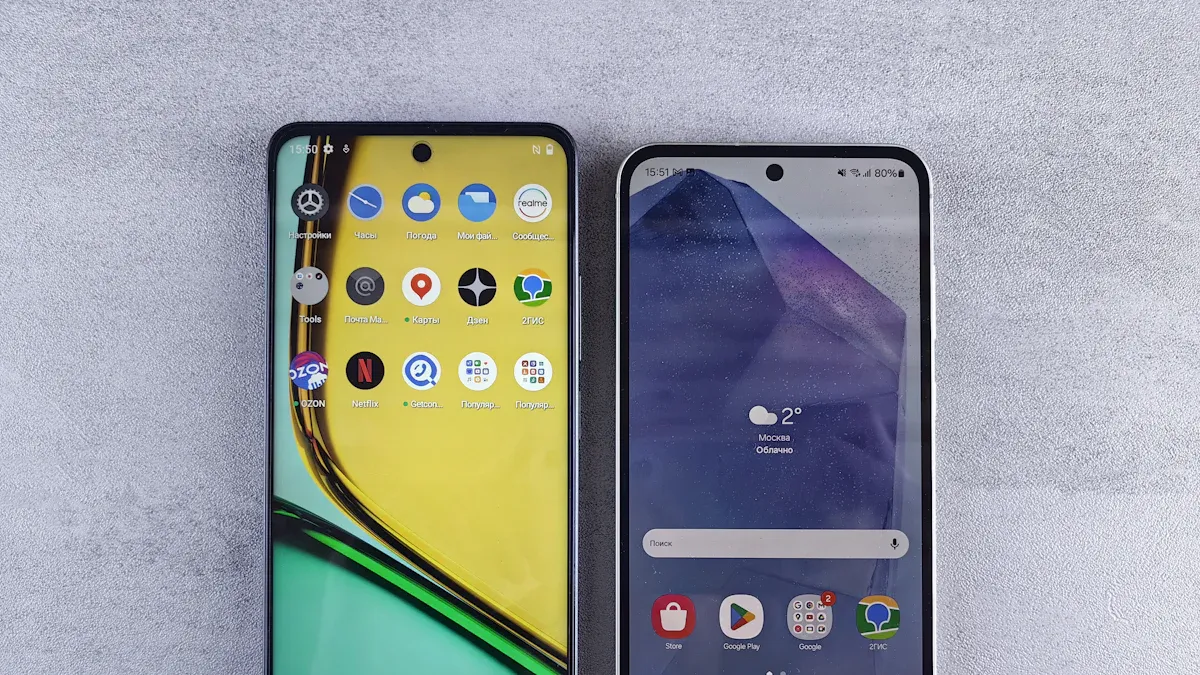
Smartphone screens get better very quickly. Every year, new changes come out. These changes affect how you use your phone. Moving from OLED to HMO display brings more new things. These new things make screens brighter and colors better. They also help your battery last longer. You notice smoother and clearer pictures. Why do these changes matter? You get better images and smarter technology. HMO display changes make phones even better than before.
Tip: Keep learning about new changes so you pick the best phone next time.
Key Takeaways
Smartphone screens started with LCD and now use OLED. This change helps colors look better and saves battery. LTPO OLED lets screens change how fast they refresh. This saves power and makes phones work better. High Mobility Oxide displays move electrons faster. This gives clearer pictures and helps batteries last longer. HMO also makes phones cost less to make. So, phones can have more cool features for less money. Keep learning about new screen types. This helps you pick the best phone for your needs and budget.
Display Technology Evolution

From LCD to OLED
Smartphone screens have changed a lot over time. Early phones had LCD screens. These screens showed simple colors and brightness. LCDs were good for basic things. But they could not show deep colors. Colors looked faded. Blacks looked gray instead of black. Later, companies started using OLED screens in top phones. OLED screens made colors brighter and blacks darker. The screens got thinner and lighter. Phones became easier to hold.
The mobile device industry is growing fast. By 2025, smartphones and tablets will have 45.8% of the market.
OLED screens are popular because they look better and use less power.
They also let phones be slimmer.
Big brands use OLED screens to make their phones special.
If you like gaming or watching videos, you may want OLED or AMOLED screens.
LCD screens still cost less, so many people buy them.
Now, companies work on eco-friendly screens to help the planet.
Why OLED Changed the Game
OLED technology changed how you see your phone. You get sharper pictures and better colors. OLED screens show real blacks. This makes images look richer. You can see flexible and foldable screens now. These were not possible before. Some OLED screens use quantum dots to get even brighter.
Improvement Type | Description |
|---|---|
Color Accuracy | OLED screens show colors more correctly than old screens. |
Contrast Ratios | OLED screens have better contrast, so images look deeper. |
Flexibility | Flexible and foldable screens are a big new idea. |
Quantum Dot Integration | QD-OLED mixes OLED and quantum dots for brighter screens. |
You see these changes every time you use your phone. OLED screens make everything look smoother and clearer. You get better pictures and longer battery life. Your phone works smarter and lasts longer.
LTPO OLED Technology Advances
What is LTPO OLED?
Many new smartphones use LTPO OLED technology. This display has a special backplane called Low-Temperature Polycrystalline Oxide. It helps your screen change refresh rates fast and smooth. The display can run very fast for gaming. It can also slow down for still images. This saves energy and helps your phone work better.
Here is a table that shows the main features of LTPO OLED technology:
Characteristic | Description |
|---|---|
Ultra-Low Refresh Rates | Runs at 1–10 Hz for always-on displays, saving battery power. |
High Refresh Rates | Goes up to 120Hz or higher for smooth scrolling and gaming. |
Dynamic Refresh Rate | Switches between low and high rates based on what you see on the screen. |
Power Savings | Uses less energy than older display types. |
Adaptability | Changes refresh rates without you noticing, making your experience better. |
You get a screen that looks good and uses less power. LTPO OLED technology helps your phone use energy in a smart way.
Benefits of LTPO in Smartphones
You see the benefits of LTPO OLED every day. Your battery lasts longer because the screen slows down for still images or always-on clocks. When you scroll or play games, the refresh rate gets faster for smooth motion. This smart change helps your phone use less energy.
Your phone keeps the always-on display running at just 1Hz, so it does not drain the battery.
You get smooth gaming at 120Hz, but the phone saves power when you watch videos or read.
LTPO OLED technology can save 5-15% more power compared to older screens.
Here is a table that shows how refresh rates affect power use:
Refresh Rate | Usage Scenario | Power Consumption Impact |
|---|---|---|
120Hz | Scrolling or gaming | High |
60Hz | Video playback | Moderate |
10Hz to 1Hz | Static images or always-on clocks | Very Low |
Tip: If you want a phone with a long battery life and a smooth screen, look for LTPO OLED technology.
High Mobility Oxide and HMO Display
What is High Mobility Oxide?
Every year, display technology gets better. High mobility oxide is the next big thing after organic light-emitting diodes and LTPO screens. This material helps electrons move faster inside the screen. It has better electron movement than old oxide thin film transistor designs. Oxide TFTs save energy, but they cannot handle high-resolution or high-refresh-rate screens. High mobility oxide fixes this problem. You see sharper pictures and smoother motion. Phones with high mobility oxide use less power and last longer.
High mobility oxide makes electrons move faster for quick switching.
You get screens with high resolution and high refresh rates.
Your battery lasts longer because power use goes down.
High mobility oxide works with flexible and foldable screens.
HMO Display Innovations
There are many new ideas in hmo display technology. Apple and Samsung are leading with new hmo display panels. Apple wants to use high mobility oxide displays instead of LTPO panels in future phones. This change means better energy savings and lower costs. Devices get thinner and have cool features like always-on displays. Hmo display panels switch pixels faster, so you see smoother animations and better graphics in games and apps.
Hmo display panels make devices lighter and thinner.
You get better battery life and use less power.
Always-on displays work better with hmo display technology.
Cameras work better with faster pixel switching.
Hmo display panels cost less to make than LTPO panels.
Gaming displays get new features like ultra-wide screens and high refresh rates.
Note: Hmo display technology helps companies make cheaper smartphones with cool features.
Power Efficiency and VRR
You want your phone to last longer and run smoothly. Hmo display panels use high mobility oxide to use less power. This material helps the screen use less energy by improving signal processing. You get variable refresh rate (VRR) support, so the screen changes speed based on what you do. When you play games, the refresh rate goes up for smooth action. When you read or look at still images, the refresh rate goes down to save power. Hmo display panels handle these changes better than old screens.
Feature | HMO Display Benefit |
|---|---|
Power Consumption | Lower than OLED and LTPO |
Electron Mobility | Higher for fast switching |
Resolution | Supports high-resolution screens |
VRR Support | Smooth and energy-efficient |
Flexibility | Works with flexible and foldable screens |
You see hmo display panels in new phones, monitors, and gaming screens. This new technology gives you longer battery life, clearer images, and smoother motion. Hmo display technology sets a new standard for screens.
Tip: If you want a phone with great battery life and smooth graphics, look for hmo display panels with high mobility oxide.
Comparing OLED, LTPO, and HMO Displays
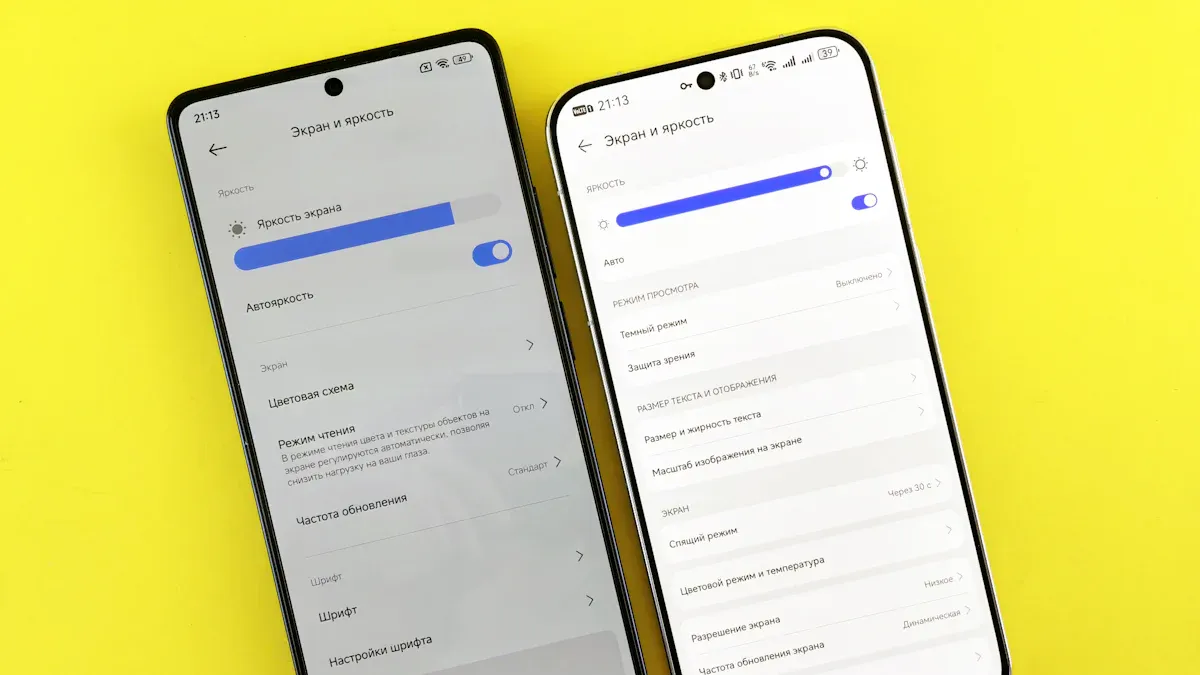
Visual Quality Differences
You see big changes in screen quality. OLED screens show bright colors and deep blacks. iphones with OLED panels have sharp images. LTPO OLED screens make iphones better. They switch refresh rates fast. This gives you smooth motion when you scroll or play games. HMO displays make quality even higher. You get clearer pictures and brighter colors on new iphones. HMO display technology lets you have high resolution and fast refresh rates together.
Display Type | Color Quality | Black Levels | Motion Smoothness | iphones Example |
|---|---|---|---|---|
OLED | Very High | Deep Black | Good | iPhone 12 |
LTPO OLED | Very High | Deep Black | Excellent | iPhone 13 Pro |
HMO | Highest | True Black | Best | Future iPhones |
Tip: For the best screen to watch videos or play games, pick iphones with HMO displays.
Energy Efficiency Comparison
Battery life is important to you. OLED screens use less power than old LCD screens. iphones with LTPO OLED displays save more energy. They change refresh rates to use less power. When you read or look at still images, the screen slows down. This helps save battery. HMO displays help iphones last even longer. These screens use high mobility oxide to lower energy use. You get longer battery life and keep good quality.
OLED: iphones have good battery life.
LTPO OLED: iphones have better battery life with smart refresh rates.
HMO: iphones have the best battery life with advanced display technology.
Note: HMO displays help iphones work longer on one charge.
Manufacturing and Cost Factors
You want a phone that works well and costs less. OLED screens cost more to make than LCD screens. iphones with LTPO OLED displays cost even more. They use special materials. HMO displays change this problem. Companies can make iphones with HMO screens for less money. These screens use new materials that are easier to make. You get better features and pay less.
Display Type | Manufacturing Cost | iphones Price Impact | Production Speed |
|---|---|---|---|
OLED | High | Higher | Moderate |
LTPO OLED | Higher | Highest | Slow |
HMO | Lower | Lower | Fast |
Tip: HMO displays help make iphones cheaper and easier for more people to buy.
Future Trends in Smartphone Display Technology
What Users Can Expect Next
You will see new changes in phone screens soon. Screens will look brighter and sharper. HMO displays will make pictures clearer and motion smoother. Your battery may last longer because these screens use less power. Flexible and foldable screens will be easier to find. Gaming and watching videos will get better with faster refresh rates.
Phone makers will try new things to make phones smarter. Some screens might change shape or size. Some phones will use microLED displays. HMO displays will still be popular because they cost less and work well. More phones will have always-on displays and show colors more accurately. These changes will make your phone more fun and helpful.
Tip: Look for new screen trends. You can pick a phone that fits your needs and budget.
Here is a table that shows how HMO displays compare to other new technologies:
Technology | Electron Mobility (compared to a-Si) |
|---|---|
HMO | |
microLED | N/A |
Other Tech | N/A |
HMO displays let electrons move much faster than older screens. This means your phone works better and faster.
Impact on Manufacturers
Phone makers will change how they build smartphones. Companies will use HMO displays to save money and make phones faster. They will add more features without making phones cost more. Phones may get thinner and lighter because new screens need less space.
Manufacturers will follow new trends to stay ahead. They will use screens that save energy and look better. You will see more choices when you shop for a phone. Companies will try to give you the best screen for a good price.
Note: Manufacturers will use new screen technology to make better smartphones for you.
You have watched smartphone screens change from OLED to HMO. HMO displays show brighter colors and smoother motion. They help your battery last longer. Phones with HMO cost less and are easier to make. Here are some important things:
Key Feature | Description |
|---|---|
Cost and Simplicity | HMO makes phones cheaper and easier to build. |
Scalability | HMO works for small and big screens. |
Future Standard | HMO will probably be the main choice for new devices. |
HMO uses fast electron movement for better pictures and saves power.
It uses one oxide material, so making screens is easier.
HMO works for large displays, not only phones.
You will see even better screens as HMO gets more popular. Keep learning about new screen trends to pick the best phone for you.
FAQ
What makes micro-led different from other display types?
You see micro-led as a new display technology. It uses tiny LEDs for each pixel. This gives you brighter screens and better colors. Micro-led also lasts longer than older screens. You get less power use and sharper images.
Are micro-led displays better for your eyes?
You get less eye strain with micro-led displays. These screens show clear images and reduce flicker. You see true colors and deep blacks. Micro-led displays also adjust brightness well. This helps your eyes feel comfortable during long use.
Will micro-led screens save battery life?
You notice longer battery life with micro-led. Each pixel lights up only when needed. This means your phone uses less energy. Micro-led works well for always-on displays. You can use your device longer without charging often.
Can you find micro-led in phones today?
You do not see many phones with micro-led yet. Most phones use OLED or HMO screens now. Companies plan to add micro-led to new models soon. You will see more micro-led options in the next few years.
How do micro-led displays compare to OLED and HMO?
You get brighter screens and better contrast with micro-led displays. These screens last longer than OLED. HMO screens offer great power savings. Micro-led gives you the best mix of color, brightness, and battery life.
Tip: Watch for micro-led in future phones if you want top display quality.
See Also
Understanding The Key Differences Between OLED And LED Displays
How BOE's Flexible Displays Are Shaping Consumer Technology Trends
A Detailed Comparison Of BNL And OLED Display Technologies
A Simple Guide To Understanding Transparent OLED Displays
Discovering BOE's Cutting-Edge Display Technologies For The Future