Common Cathode and Common Anode LEDs Explained
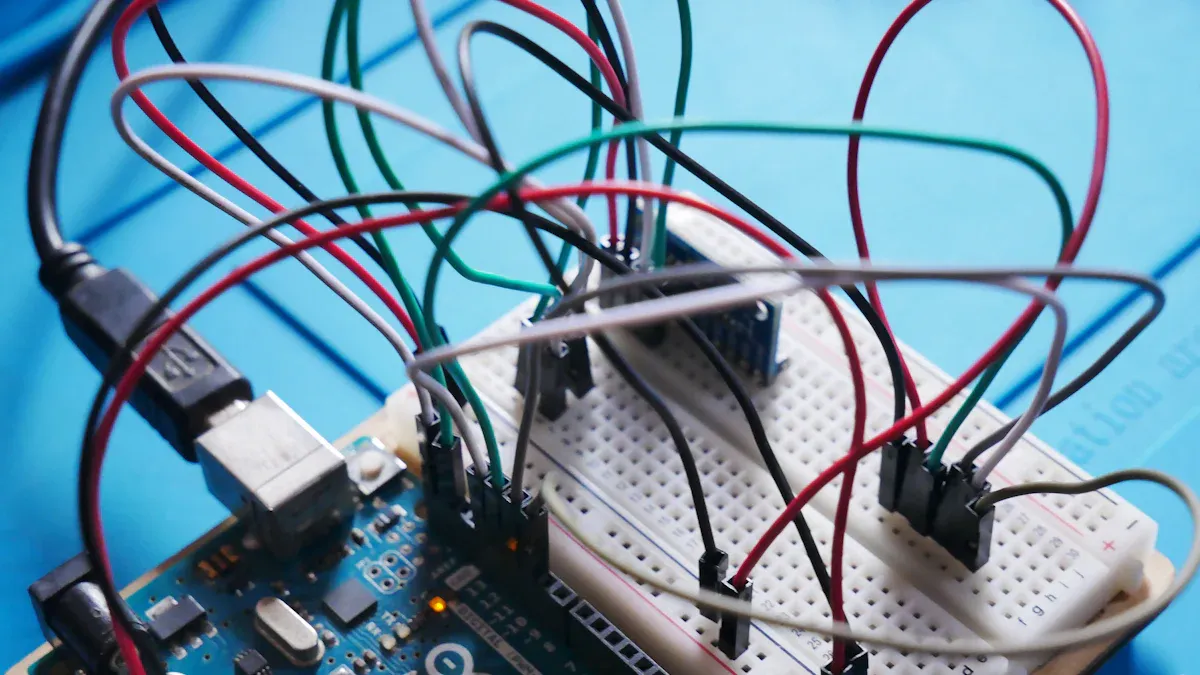
You often see the terms LED. Common Cathode and Common Anode when working with led displays or multi-color led modules. The main difference lies in which terminal is shared. In a common cathode led, all negative legs connect to ground. In a common anode led, all positive legs connect to power. Knowing this helps you wire and control each led correctly. The table below shows how each led type works best in different circuits:
LED Type | Configuration Description | Best Use Case |
|---|---|---|
Common Anode | All positive terminals are connected to a voltage source; controlled via negative terminals. | When the circuit sinks current. |
Common Cathode | All negative terminals are connected to ground; controlled via positive terminals. | When the circuit sources current. |
Understanding these differences lets you choose the right led for your project and avoid wiring mistakes.
Key Takeaways
Understand the difference between common cathode and common anode LEDs. This knowledge helps you wire and control your LED circuits correctly.
Always check the polarity before connecting LEDs. Mixing up connections can prevent your LED from lighting up and may cause damage.
Use a current-limiting resistor with your LEDs. This protects them from too much current and extends their lifespan.
Consult the datasheet for your LED. It provides essential information about pinout, voltage, and current requirements to avoid mistakes.
Choose the right LED type based on your project needs. Common cathode works well with microcontrollers, while common anode is better for driver chips.
LED. Common Cathode and Common Anode Differences
Shared Terminals Explained
When you work with led. common cathode and common anode, you need to understand which terminal is shared in each configuration. This detail affects how you wire your led circuits and how you control each segment.
How it Works | ||
|---|---|---|
Common Anode | Anode (+) | The anode connects to the power supply. You control each led segment by connecting its cathode to ground. The segment lights up when you pull the cathode LOW. |
Common Cathode | Cathode (-) | The cathode connects to ground. You control each led segment by applying voltage to the anode. The segment lights up when you drive the anode HIGH. |
You will notice that the shared terminal in both led. common cathode and common anode configurations makes wiring easier. You can connect multiple segments to a single point, which reduces the number of wires you need. This design simplifies your circuit and helps you avoid mistakes.
Tip: Always check the polarity before wiring your led. If you mix up the common anode and common cathode configuration, your led will not work as expected.
Control Logic and Wiring
The way you control led. common cathode and common anode depends on their configuration and polarity. Each type uses a different logic to turn segments ON or OFF.
Signal to Turn On Segment | Connection Type | |
|---|---|---|
Common Anode | LOW | Cathode |
Common Cathode | HIGH | Anode |
In a common anode configuration, you keep the anode at a constant HIGH voltage. You turn on each led segment by pulling its cathode LOW. This means you use a LOW signal to activate the segment. In a common cathode configuration, you keep the cathode at ground. You turn on each led segment by applying a HIGH signal to its anode. This means you use a HIGH signal to activate the segment.
You must pay attention to the polarity when wiring led. common cathode and common anode. If you use the wrong control logic, your led segments will not light up. Always match your wiring to the configuration type.
Power and Voltage Needs
You need to supply the correct voltage to your led. common cathode and common anode configurations. The way you apply voltage depends on the type of configuration and the polarity.
Type of LED | Control Logic Description | |
|---|---|---|
Common Cathode | Apply HIGH voltage to the anode pin to illuminate the segment. | Current flows from the anode to the grounded cathode, lighting up the segment. |
Common Anode | Connect the cathode to ground (LOW) to illuminate the segment. | The common anode stays at HIGH voltage. Segments turn on with a LOW signal, which inverts the logic. |
You must check the voltage requirements for your led. Most led. common cathode and common anode configurations work with 5V or 12V, but you should always confirm with the datasheet. Using the wrong voltage can damage your led or cause it to work incorrectly.
Note: Always use a current-limiting resistor with your led. This protects your led from too much current and extends its life.
You will find that understanding the differences in configuration, control logic, and voltage needs helps you wire and control your led. common cathode and common anode circuits with confidence. You can avoid wiring errors and make your projects work smoothly by following these guidelines.
Defining Common Cathode and Common Anode LED

What is Common Cathode?
You often see the term common cathode when you work with multi-segment led displays or RGB led modules. In a common cathode configuration, all the cathode pins of the led segments connect together and share a single ground point. This setup makes wiring easier because you only need one connection for the negative side. You control each segment by applying voltage to the individual anode pins. When you drive the anode HIGH, current flows through the led anode cathode path, and the segment lights up. You need to pay attention to polarity because reversing the connections will prevent the led from working.
You usually use common cathode leds in circuits where the controller or microcontroller can source current. For example, if you want to light up a segment, you set the corresponding pin HIGH. This configuration works well with many microcontrollers and simple driver circuits. You should always check the datasheet to identify led anode and cathode pins before wiring. This step helps you avoid mistakes and ensures proper operation.
What is Common Anode?
You also encounter common anode leds in displays and color mixing applications. In a common anode configuration, all the anode pins connect together and share a single positive voltage source. You control each segment by connecting its cathode to ground. When you pull the cathode LOW, current flows through the led anode cathode path, and the segment turns on. The polarity in this configuration is important because the common anode must stay at a higher voltage than the cathode.
Common anode leds work best in circuits where the controller can sink current. You activate a segment by setting the corresponding pin LOW. This configuration is popular in led displays that use transistor arrays or specialized driver chips. You should identify led anode and cathode pins using the datasheet or pinout diagram. This step helps you match the wiring to the correct configuration and avoid damage.
Tip: Always double-check the configuration and polarity before connecting your led. This habit helps you prevent wiring errors and keeps your circuit safe.
LED Type | Shared Terminal | Control Method | Typical Use Case |
|---|---|---|---|
Common Cathode | Cathode (-) | Source current (HIGH) | Microcontroller outputs |
Common Anode | Anode (+) | Sink current (LOW) | Driver chips, transistor arrays |
Identifying LED Types
Pinout and Physical Clues
You can identify the type of led by examining its pinout and physical features. Most multi-segment led displays and RGB led modules have several pins. One pin acts as the common connection. You often see this pin longer than the others or placed in a unique position. Manufacturers sometimes mark the common pin with a dot or a notch on the package.
You can use a simple test to check the configuration. Take a multimeter and set it to diode mode. Touch the probes to different pins. If the led lights up when you connect the positive probe to one pin and the negative probe to others, you likely have a common cathode led. If the led lights up when you reverse the probes, you probably have a common anode led.
Here is a quick checklist to help you:
Count the number of pins on your led.
Look for a longer pin or a special marking.
Use a multimeter to test the polarity.
Tip: Always power off your circuit before testing the led. This step prevents accidental damage.
Datasheet and Labeling
You can find the most reliable information about your led in its datasheet. Manufacturers provide datasheets that show the pinout diagram, electrical characteristics, and configuration type. The datasheet will tell you if the led is common cathode or common anode. You should look for a section that describes the shared terminal and control logic.
Labeling on the packaging or the led itself can also help. Some leds have part numbers that include "CA" for common anode or "CC" for common cathode. You may see a table or diagram printed on the box or bag. This information matches what you find in the datasheet.
Common anode leds have all their positive connections tied together. You need to apply a LOW signal to activate a segment. Common cathode leds have their negative connections tied together. You need to apply a HIGH signal to light up a segment. You can confirm this distinction by reading the datasheet and checking the labeling.
Feature | Common Cathode LED | Common Anode LED |
|---|---|---|
Shared Terminal | Cathode (-) | Anode (+) |
Activation Signal | HIGH | LOW |
Typical Labeling | "CC", Pinout shows ground | "CA", Pinout shows Vcc |
You should always consult the datasheet before wiring your led. This habit helps you avoid mistakes and ensures your project works as expected.
Connecting Common Cathode and Common Anode LEDs
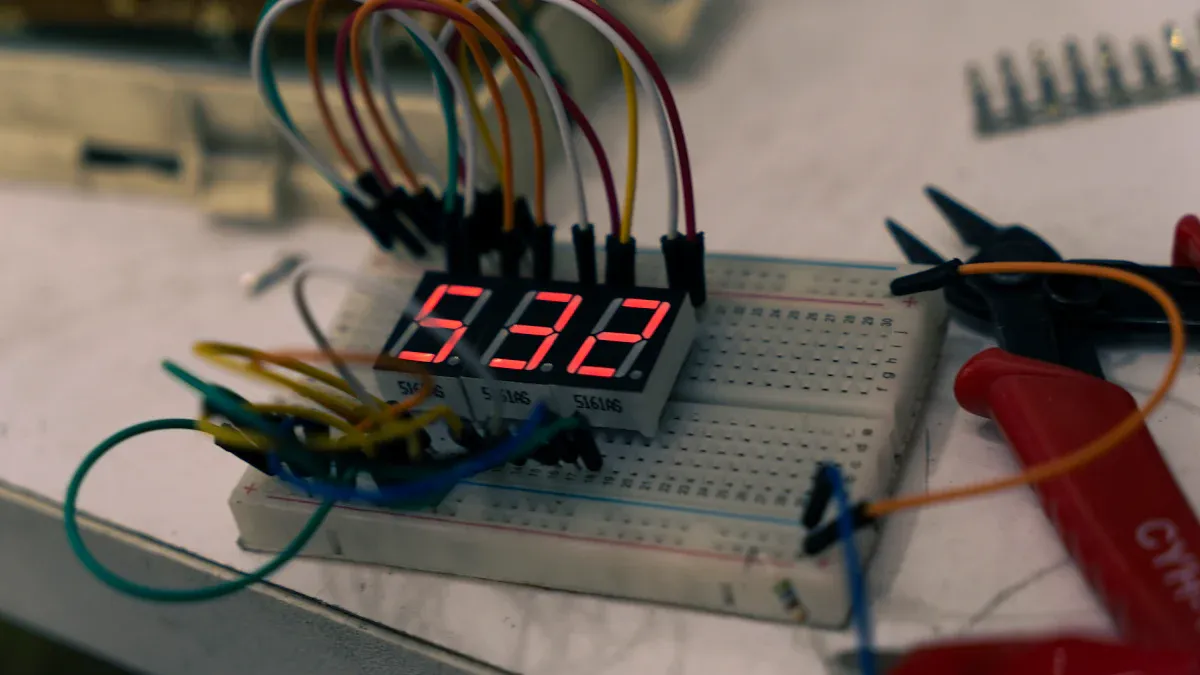
Wiring Methods
You need to follow the right steps for circuit connection when you work with common cathode or common anode LEDs. Start by identifying the shared terminal. For a common cathode LED, connect led cathode and anode by wiring all cathodes to ground. Each anode goes to a separate control pin. When you apply a HIGH signal to an anode, the segment lights up. This method ensures you use the correct polarity.
For a common anode LED, connect led cathode and anode by wiring all anodes to the positive voltage. Each cathode connects to a control pin. You turn on a segment by pulling the cathode LOW. This setup also requires correct polarity. Always use a current-limiting resistor in your circuit connection to protect the LED.
Note: LED lights need correct polarity. If you reverse the connections, the LED will not light up.
You should check the datasheet before you start your circuit connection. This step helps you avoid led polarity mistakes and ensures your project works as planned.
Common Mistakes
Many people make simple errors when they connect LEDs. You can avoid these problems by paying attention to details. Here are some common mistakes:
Cutting the LED legs too short. The longer leg shows the anode. If you trim both legs to the same length, you lose this clue and may mix up the correct polarity.
Ignoring the flat edge on the LED. Most round LEDs have a flat spot on the cathode side. Missing this sign can lead to reversed placement and led polarity mistakes.
Rushing during circuit connection. When you wire many LEDs quickly, small errors add up. Take your time to check each connection.
Mixing different LED types. Through-hole and SMD LEDs use different markings. Always check the datasheet to confirm the correct polarity.
Misreading PCB silk marks. Boards may use triangles, dots, or lines to show polarity. Double-check these marks before you solder.
Tip: LED lights need correct polarity. Common cathode and common anode LEDs are not interchangeable. Always match the circuit connection to the LED type.
If you follow these steps, you will avoid led polarity mistakes and keep your circuit safe.
Applications and Choosing the Right LED
Typical Uses
You will find that different types of led serve specific roles in electronics projects. Common cathode led often appears in simple circuits where you want to control each segment with a microcontroller. You might use this type in digital clocks, calculators, or basic numeric displays. The microcontroller can easily provide the current needed to light up each segment.
Common anode led works well in situations where you use driver chips or transistor arrays. You often see this type in large led displays, multiplexed signs, or RGB led modules. Driver chips can sink current from each segment, making control more efficient for bigger projects.
Here are some common applications for each type:
Common Cathode LED:
Digital clocks
Simple counters
Microcontroller-based displays
Common Anode LED:
Multiplexed led displays
RGB led modules for color mixing
Large signage with driver ICs
Note: Always match the led type to your control circuit for the best results.
Selection Tips
Choosing the right led for your project depends on your circuit and control method. Start by checking what kind of controller or driver you plan to use. If your microcontroller can source current, a common cathode led may be the best choice. If your circuit needs to sink current, a common anode led will work better.
You should also consider the number of segments or colors you want to control. For RGB lighting, check if the led module uses a common anode or common cathode design. Always read the datasheet before you buy or connect any led. The datasheet gives you the pinout, voltage, and current details.
Here is a quick table to help you decide:
Project Type | Recommended LED Type | Reason |
|---|---|---|
Microcontroller projects | Common Cathode | Easy current sourcing |
Driver chip or transistor | Common Anode | Efficient current sinking |
RGB color mixing | Check datasheet | Both types are available |
Tip: Test your led with a simple circuit before final installation. This step helps you avoid wiring mistakes and ensures your project works as planned.
You can easily tell the difference between common cathode and common anode LEDs by how you connect and control them. The table below highlights the main features:
Feature | Common Cathode (CC) | Common Anode (CA) |
|---|---|---|
Connection | Cathodes are grounded | All anodes are tied to common positive voltage (Vcc) |
Control | HIGH to light up the segments | Apply LOW to light up the segments |
A simple rule of thumb: connect the common leg to ground for common cathode, or to positive for common anode. Always check datasheets and wiring diagrams before you use any led. This helps you avoid connection errors and keeps your circuit safe.
Remember: Correct identification and connection prevent damage, overheating, and unstable lighting.
FAQ
How do you tell if an LED is common cathode or common anode?
You can check the datasheet or use a multimeter in diode mode. If the LED lights up when you connect the positive probe to a pin and the negative to others, it is common cathode. If it lights up with reversed probes, it is common anode.
Can you use common cathode and common anode LEDs in the same circuit?
You should avoid mixing them. Each type needs different wiring and control logic. Mixing them can cause segments not to light up or even damage your components. Always match your circuit to the LED type.
Why do you need a resistor with LEDs?
A resistor limits the current flowing through the LED. Without it, you risk burning out the LED or damaging your circuit. Always calculate the correct resistor value based on your supply voltage and LED specifications.
What happens if you connect an LED with the wrong polarity?
The LED will not light up. In some cases, you may damage the LED or other components. Always check the pinout and wiring before powering your circuit.
Do common cathode and common anode LEDs have different brightness?
Both types can reach similar brightness if you supply the correct voltage and current. The brightness depends on the LED’s specifications, not the configuration.
See Also
A Comprehensive Overview of Essential LED Terminology
Key Differences Between LCD Splicing Screens and LED Displays
Understanding Micro LED Technology for Future Display Innovations