How to Select the Best Outdoor Advertising Screen for Your Business
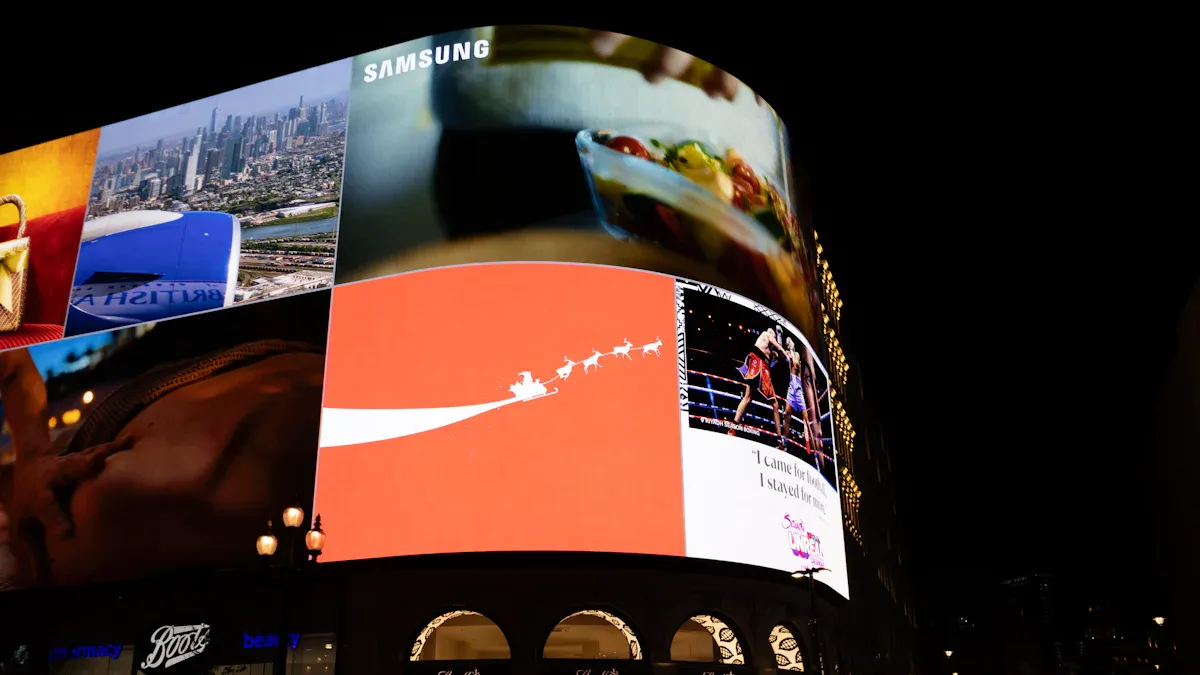
Selecting the best outdoor advertising screen for your business begins with aligning your screen’s capabilities to your objectives, audience, and environment. You boost advertising effectiveness by choosing outdoor screens that offer high visibility, high contrast, and weather resistance. Integrate led digital screen advertising with digital and mobile channels for enhanced brand visibility and engagement. Programmatic buying and real-time campaign flexibility let you tailor messaging and video content for quality digital advertising campaigns. Why led screen advertising is the smart choice: you get robust outdoor performance and measurable ROI from your outdoor advertising screens.
Prioritize screen specs, location, and integration to maximize quality and impact.
Key Takeaways
Define your advertising goals clearly. Knowing whether you want to increase brand awareness or drive foot traffic helps you choose the right screen.
Understand your target audience. Tailor your content and screen placement based on their demographics and preferences for better engagement.
Evaluate the installation site carefully. Consider visibility, distance, and environmental factors to ensure optimal screen performance.
Choose outdoor LED screens over LCD for better brightness and durability. LED screens perform well in various weather conditions and require less maintenance.
Plan for both upfront and ongoing costs. Factor in installation, maintenance, and energy expenses to ensure your budget aligns with your advertising goals.
Set Your Advertising Goals
Define Objectives
Start your selection process by clarifying what you want to achieve with your outdoor advertising screen. Do you want to increase brand awareness, drive foot traffic, or promote a specific product? Each objective requires a different approach. For example, if your goal is to boost brand visibility in a busy urban area, you need a screen with high brightness and dynamic content capabilities. If you want to drive immediate action, such as store visits or event attendance, focus on clear calls-to-action and real-time updates.
Tip: Write down your top three advertising goals before you begin evaluating outdoor screens. This list will help you stay focused and make decisions that align with your business strategy.
Know Your Audience
Understanding your audience shapes every aspect of your advertising strategy. Analyze who you want to reach—consider age, gender, income, and interests. These factors influence where you place your outdoor advertising screen and what content you display. For instance, younger audiences may respond better to interactive features and vibrant visuals, while professionals might prefer concise messages in high-traffic business districts.
Personalization in outdoor advertising has become more effective with real-time data. You can tailor messages to match the demographics present at any given time, increasing engagement and relevance. When you know where your target audience spends their time, you can position your outdoor screens in locations that maximize exposure and impact.
A clear understanding of your audience ensures your advertising resonates and drives results. This approach not only improves engagement but also helps you achieve your business objectives efficiently.
Location and Environment for Outdoor Screens
Site Analysis for Outdoor LED Advertising Screen
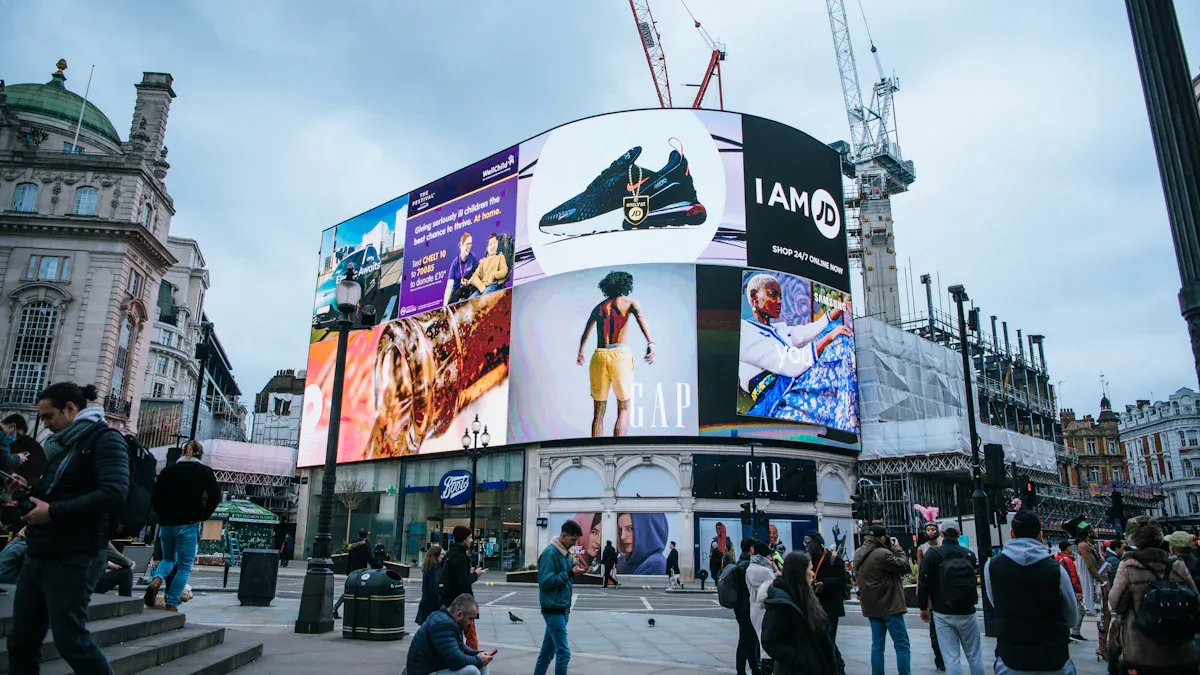
You need to start your selection process by analyzing the installation site for your outdoor led advertising screen. Begin by evaluating the physical space and the distance from which viewers will see your display. Large, open areas such as highways or stadiums require bigger screens to ensure visibility from afar. In contrast, smaller spaces or locations with close foot traffic benefit from a smaller pixel pitch, which delivers sharper images at short distances.
Consider the mounting structure and its ability to withstand wind loads. The support must remain stable during storms or high winds. You should also check for potential hazards like lightning or electromagnetic interference. Make sure your screen’s brightness and contrast ratio meet the visibility requirements for the location, especially if the area receives direct sunlight. Always review local regulations and secure the necessary permits before installation. This step ensures your outdoor advertising screen complies with building codes and safety standards.
Tip: Conduct a thorough site survey before making any purchase decisions. This helps you avoid costly mistakes and ensures optimal screen performance.
Environmental Factors and Weather Resistance
Outdoor screens face a range of environmental challenges that can impact their lifespan and performance. You must select a screen engineered for durability in your specific climate. The table below outlines how different weather conditions affect outdoor advertising screens:
Weather Condition | Impact on Lifespan |
|---|---|
Heat | Reduces performance stability; requires heat dissipation systems. |
Rain and Humidity | Can corrode electronic parts if not properly sealed; risks from water intrusion. |
Cold Weather | Reduces battery efficiency; can cause screen flickering. |
Snow | Adds weight and pressure; risks if not engineered properly. |
Wind | Creates stress on structure; can weaken foundations. |
Dust | Reduces cooling efficiency; can settle in ventilation systems. |
Seasonal Shifts | Gradual degradation of materials; affects brightness and color. |
Choose an outdoor advertising screen with a high IP rating to protect against water and dust. Prioritize models designed for your region’s most common weather threats. By addressing these factors, you extend the life of your investment and maintain reliable performance year-round.
Outdoor Advertising Screen Types
Outdoor LED Advertising Screen vs. LCD
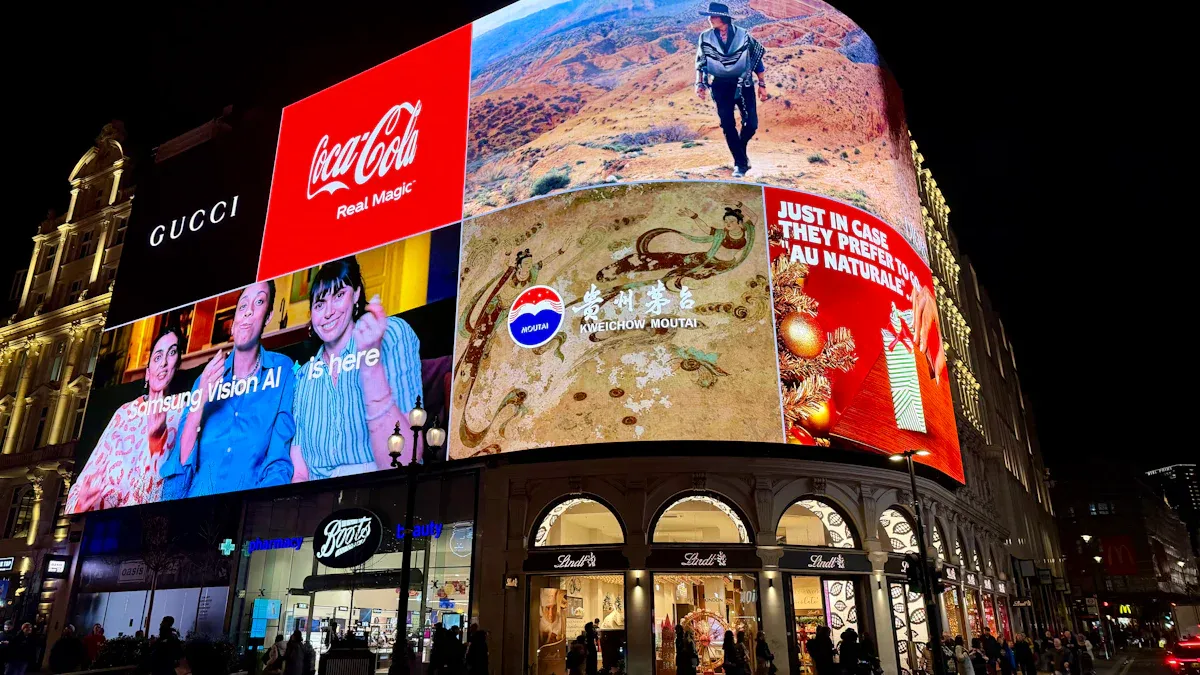
You face a critical choice between outdoor LED advertising screen and LCD when planning your outdoor advertising strategy. Each technology offers unique advantages for outdoor screens. The table below highlights the main differences:
Feature | Outdoor LED Screens | Outdoor LCD Screens |
|---|---|---|
Brightness | 1,000 to over 10,000 nits | 300–500 nits |
Contrast | True black, high contrast | Light leakage, washed-out blacks |
Durability | IP-rated, weather resistant | Less durable, not weather resistant |
Maintenance | Lower maintenance required | Higher maintenance required |
You get much higher brightness and contrast with LED. Outdoor LED billboard displays withstand harsh weather and require less maintenance. LCD screens often struggle with sunlight and moisture. For most outdoor advertising screens, LED delivers better performance and reliability.
Fixed vs. Mobile Installations
You must decide if you want a fixed or mobile installation for your outdoor led billboard. Fixed installations stay in one location, making them ideal for long-term campaigns in high-traffic areas. You can target commuters or pedestrians with consistent messaging. Mobile LED billboards, mounted on vehicles, move through different neighborhoods. This approach lets you reach a wider audience and adapt to changing events or promotions. Both options support led digital screen advertising, but your choice depends on your campaign goals and audience location.
Tip: Use mobile outdoor led billboard units for event-based advertising or when you need flexibility.
Outdoor LED Billboard Options
You have several outdoor led billboard options to choose from for your advertising needs:
Fixed LED screens for permanent, high-impact displays.
Mobile LED screens for flexible, on-the-go campaigns.
Large LED billboards along highways and busy streets for maximum visibility.
Transparent LED screens on glass surfaces, perfect for luxury retail environments.
You can select the best outdoor led billboard based on your business location, audience, and campaign style. Outdoor led billboard advertising gives you the flexibility and impact needed for modern digital marketing.
Outdoor Advertising Screen Specs
Screen Size and Viewing Distance
You must select the right screen size to achieve high visibility and maximize the impact of your outdoor advertising screen. The size of your display should match both the physical space and the expected viewing distance. Large venues, such as stadiums or highways, require bigger screens to ensure long-distance visibility. Smaller areas with close foot traffic benefit from more compact displays that still deliver high resolution and image quality.
When you plan your installation, consider the typical distance between your audience and the screen. A larger screen does not always guarantee better results if your viewers stand close. Instead, you should balance screen size with pixel pitch to maintain sharp visuals and high contrast. This approach ensures your content remains clear and engaging, whether you display video, digital graphics, or text.
Tip: Measure the available space and estimate the average viewing distance before finalizing your screen size.
Pixel Pitch and the 1,000 Rule
Pixel pitch plays a critical role in determining the resolution and clarity of your outdoor led advertising screen. The pixel pitch refers to the distance between the centers of two adjacent pixels, measured in millimeters. A smaller pixel pitch delivers higher resolution and sharper images, which is essential for locations where viewers stand close to the screen.
You can use the 1,000 Rule to match pixel pitch with optimal viewing distance:
For example, a P6 led screen performs best from about 6 meters away.
A P2.5 led screen is ideal for viewing from approximately 2.5 meters.
Pixel Pitch | Best Viewing Distance (meters) |
|---|---|
P10mm | 10m+ |
P4mm–P6mm | Medium viewing ranges |
For outdoor screens viewed from 10 meters or more, a pixel pitch of P10 is recommended. This specification ensures clear visuals and supports applications such as highway signage and large stadium displays. By following this guideline, you maintain high quality and effective led digital screen advertising for any environment.
Brightness and Visibility
Brightness directly affects the visibility and effectiveness of your outdoor screens, especially in direct sunlight. You should choose a screen with a minimum brightness of 2,000 nits to ensure your content remains clear and vibrant during the day. In areas with intense sunlight, many outdoor screens operate between 1,500 and 5,000 nits. This range guarantees high visibility and high contrast, even in challenging lighting conditions.
The recommended brightness for outdoor signage in direct sunlight is typically between 1,500 and 5,000 nits.
Many outdoor solutions aim for a brightness level between 2,000 and 5,000 nits.
High brightness levels improve image quality but can increase energy consumption. Older led models with high brightness often consume more power, raising operational costs. Newer screens use automated sensors to adjust brightness based on ambient light, reducing energy usage during less demanding conditions.
Note: Leave a 5–10% margin from the edges of your screen when designing content. This practice prevents important information from being cut off and maintains a professional appearance.
Weather Resistance and IP Rating
Outdoor environments expose your advertising screens to rain, dust, wind, and temperature changes. You must select a screen with a suitable IP (Ingress Protection) rating to ensure durability and reliable performance. For regions with heavy rainfall or coastal conditions, an IP66 rating is recommended. This level withstands powerful water jets, salt spray, and humid environments, making it ideal for challenging outdoor installations.
IP Rating | Description | Application |
|---|---|---|
IP66 | Withstands powerful water jets, salt spray, humidity | Coastal areas and heavy rain regions |
Weather resistance contributes to the total cost of ownership. You may face higher material and installation costs due to the need for durable, weather-resistant materials. Ongoing maintenance and protective coatings, such as UV and weatherproof laminates, help preserve the appearance and function of your screen over time.
By prioritizing the right specs—screen size, pixel pitch, brightness, and weather resistance—you ensure your outdoor advertising screen delivers high quality, long-lasting performance for any digital campaign.
Content and Software Compatibility
Content Management Systems
You need a robust content management system to maximize the impact of your led advertising campaigns. The right CMS lets you control every aspect of your outdoor led screens from a single dashboard. You can update messaging instantly, schedule campaigns, and automate content delivery. This centralized approach saves time and reduces errors. The table below highlights essential CMS features for dynamic led advertising:
Feature | Description |
|---|---|
Update content instantly across multiple screens with ease. | |
Centralized control | Remotely manage and schedule content across all screens from one dashboard. |
Automation | Instantly push new ad campaigns, messaging, and updates in real time. |
Integration with data sources | Scale effortlessly from one display to thousands with cloud-based management. |
Dynamic optimization | Optimize campaigns by screen, time of day, or location to maximize impressions and ROI. |
Tip: Choose a CMS that offers real-time updates and dynamic optimization. This ensures your led screens always display relevant messaging and adapt to changing conditions.
Integration with Existing Platforms
You can strengthen your led advertising strategy by integrating your outdoor led screens with existing digital marketing platforms. This alignment creates a cohesive brand experience and amplifies your messaging across multiple consumer touchpoints. Outdoor led billboards often use programmatic advertising to launch campaigns quickly and target audiences based on location and demographics. You gain the ability to optimize messaging in real time, ensuring your content remains relevant and impactful.
Outdoor led advertising also works well with digital, social, and traditional media. This cross-channel synergy boosts brand awareness and engagement. You deliver a unified message that resonates with your audience, whether they see your led billboard, digital ad, or social media post.
Note: Integration with your current platforms allows you to manage campaigns efficiently and measure performance across all channels.
Maintenance and Warranty
Maintenance Needs
You must prioritize regular maintenance to keep your outdoor advertising screen performing at its best. A structured approach helps you prevent unexpected failures and extend the lifespan of your investment. Follow these essential steps:
Regular Inspections: Check your screen daily and weekly for dead pixels, brightness uniformity, and structural integrity.
Cleaning Practices: Use soft cloths and mild detergents. Avoid harsh chemicals and direct water jets to protect sensitive components.
Electrical Protection: Inspect grounding systems and waterproofing seals. This step prevents electrical hazards and water damage.
Software Maintenance: Update your software frequently. Security patches and performance optimizations keep your system running smoothly.
Environmental Management: Clean your screen more often if you operate in high-pollution or extreme climate areas.
Tip: Schedule maintenance based on your local environment and usage patterns. Consistent care reduces costly repairs and downtime.
Service and Support
Reliable service and support give you peace of mind and maximize operational uptime. Advanced remote monitoring lets you control power and diagnose issues from anywhere. You respond quickly to alerts and resolve problems before they disrupt your advertising campaigns.
“With Outdoorlink’s unmatched service, you can monitor and remotely control power from anywhere in the world—an essential capability as we move into 2025. This technology eliminates approximately 85% of truck rolls, ensuring smoother operations and more reliable ownership. Outdoorlink devices give digital billboard owners a true competitive edge by significantly increasing uptime.”
— Bobby Tatman, Digital Sales Manager at Formetco
Remote monitoring reduces truck rolls by up to 85%.
Real-time alerts enable fast action and keep your screens running.
Predictive monitoring lowers maintenance costs and minimizes downtime.
Warranty Terms
You need to review warranty terms before purchasing your outdoor advertising screen. A strong warranty protects your investment and covers unexpected issues. Manufacturers offer different coverage periods and conditions. Compare these features:
Warranty Feature | Typical Coverage |
|---|---|
Parts Replacement | 1–3 years |
Labor | 1–2 years |
On-site Service | Available with premium packages |
Software Updates | Included during warranty period |
Note: Choose a warranty that matches your business needs. Longer coverage and on-site service reduce risk and support reliable operations.
Cost, Budget, and ROI
Upfront and Ongoing Costs
You must evaluate both upfront and ongoing expenses when planning your outdoor led billboard investment. The cost of outdoor led advertising screens depends on size, resolution, and installation complexity. Smaller outdoor led billboard units typically start between $30,000 and $50,000. Larger, high-resolution outdoor led billboard displays can reach $150,000 or more, especially in metropolitan areas where installation requires steel structures and advanced electrical work. You should factor in these costs to ensure your budget aligns with your advertising goals.
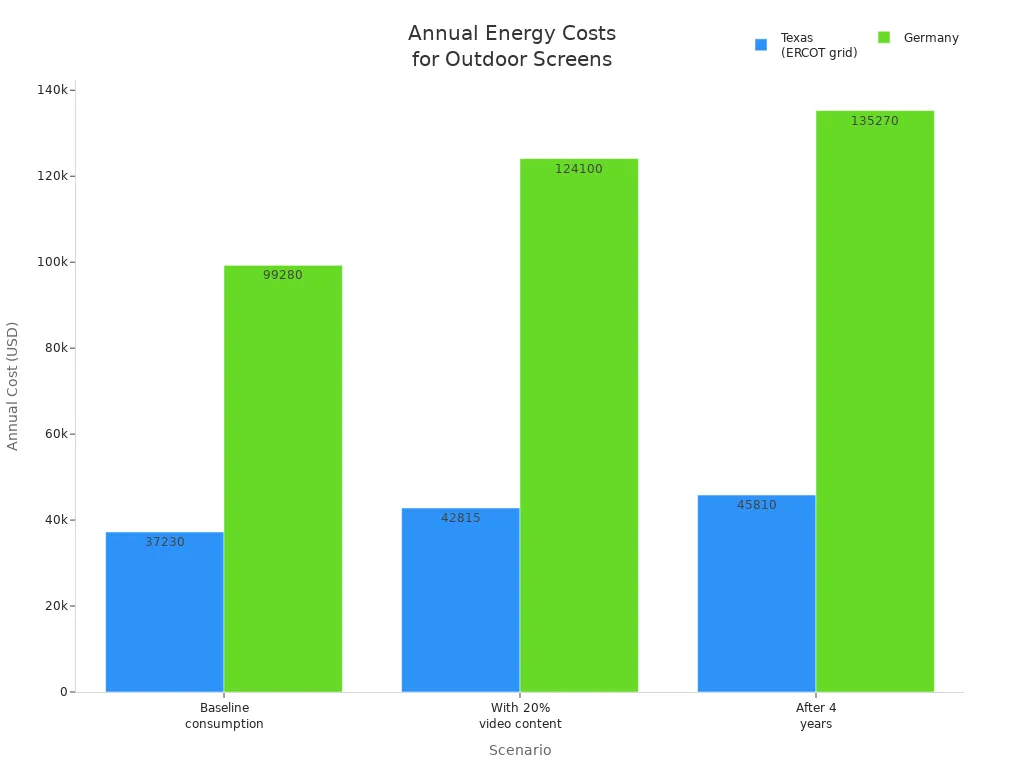
Ongoing expenses include maintenance and energy consumption. Outdoor screens require regular servicing to maintain quality and visibility. Annual maintenance costs range from $5,000 to $15,000. Energy costs represent a significant portion of your total budget, often accounting for 60–80% of ten-year expenses. The table below shows typical annual costs for outdoor led billboard operations:
Factor | Texas (ERCOT grid) | Germany |
|---|---|---|
Baseline consumption | $37,230/year | $99,280/year |
With 20% video content | $42,815/year | $124,100/year |
After 4 years | $45,810/year | $135,270/year |
Maintenance costs | $5,000–15,000/year | N/A |
Efficiency decay increase | 5–10% | N/A |
Tip: Plan for efficiency decay and rising energy costs to protect your investment over time.
Estimating ROI for LED Billboard
You can estimate return on investment for your outdoor led billboard by analyzing rental rates and advertising revenue. Monthly rental rates for outdoor led billboard advertising range from $1,200 to $15,000. Annual advertising revenue can reach $14,400 to $180,000, depending on location, audience engagement, and content quality. Digital led billboards offer multiple revenue streams by displaying several ads on a single screen, increasing income potential through flexible content and high visibility.
Metric | Value Range |
|---|---|
Monthly Rental Rates | $1,200 - $15,000 |
Annual Advertising Revenue | $14,400 - $180,000 |
You gain measurable benefits such as increased foot traffic, sales growth, and enhanced brand recognition. Outdoor led billboard advertising delivers strong engagement and supports your business objectives. You maximize ROI by optimizing content, maintaining high visibility, and leveraging digital features.
Note: Track performance metrics regularly to refine your strategy and boost long-term returns.
You can select the best outdoor led billboard for your business by following a clear checklist:
Set your goals for outdoor advertising.
Know your audience and their habits.
Choose high-traffic locations for your outdoor led billboard.
Pick the right format and size for your outdoor led billboard.
Plan your budget and consider long-term costs.
Design bold, simple messaging for your outdoor led billboard.
Check legal requirements and permits.
Work with trusted vendors.
Track your outdoor led billboard campaign results.
Learn and improve for future success.
Balance quality, durability, and cost to maximize your investment. Consult with industry experts to ensure your outdoor led billboard delivers strong results.
FAQ
What is the ideal pixel pitch for outdoor advertising screens?
You should select a pixel pitch based on viewing distance. For close-up viewers, choose a smaller pixel pitch like P4 or P6. For highway billboards, P10 or higher works best.
How often do you need to maintain outdoor LED screens?
You should inspect and clean your screens monthly. Schedule professional maintenance at least twice a year. Regular care prevents failures and extends the screen’s lifespan.
Can outdoor LED screens operate in extreme weather?
Yes, most outdoor LED screens with high IP ratings (IP65 or IP66) withstand rain, dust, and temperature swings. Always confirm the screen’s specifications match your local climate.
How do you calculate the ROI of an outdoor advertising screen?
Track your ad revenue, rental rates, and operational costs. Compare these figures to your initial investment. Use this formula:
ROI = (Total Revenue – Total Costs) / Initial Investment × 100%
See Also
Choosing Ideal Outdoor Signage That Meets Your Business Goals
Seven Essential Display Screens for Today's Advertising Needs
Best Digital Signage Displays Tailored for Business Use
Evaluating Leading Digital Signage Software Options for Companies