What is Tandem OLED and why BOE Tandem OLED display is good
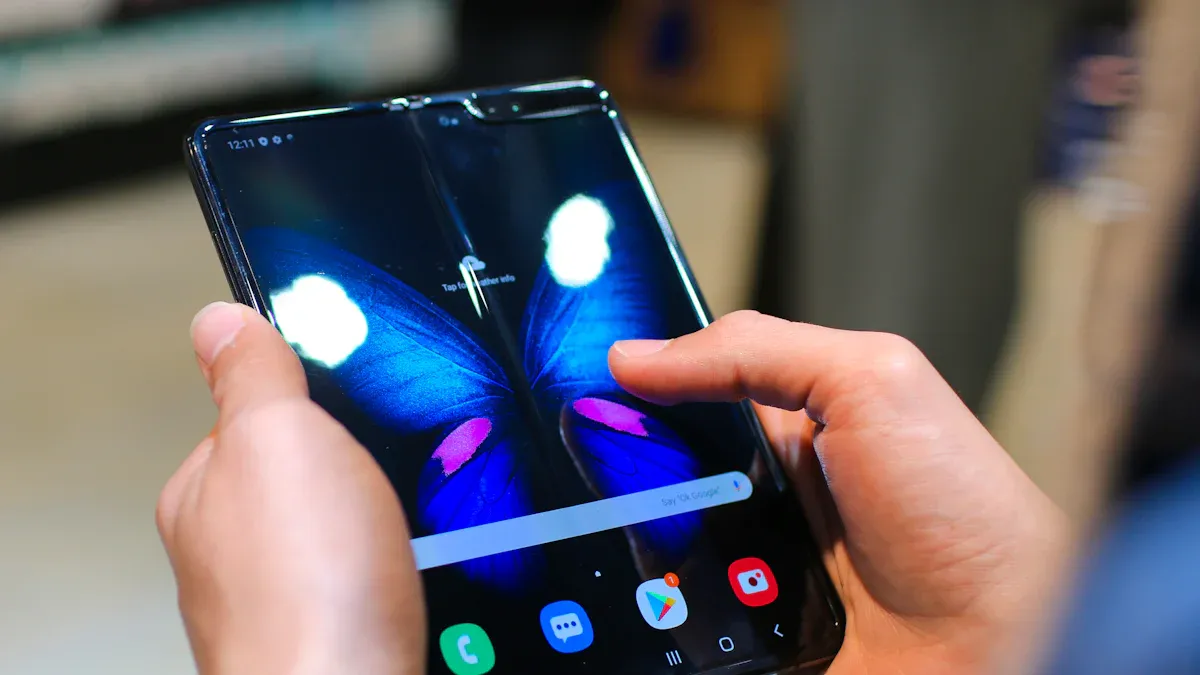
You see Tandem OLED as a breakthrough that uses two stacked light-emitting layers, not just one. This advanced structure delivers brighter visuals and longer screen life for your devices. As the global OLED display market surges toward USD 260.50 billion by 2035, you demand larger, more efficient, and more vibrant screens. BOE leads with its f-OLED product line, combining cutting-edge materials and design. You benefit from higher brightness, lower power use, and extended durability—all thanks to BOE’s innovation in Tandem OLED technology.
Key Takeaways
Tandem OLED technology uses two stacked emission layers, resulting in brighter displays and longer lifespans for devices.
BOE's Tandem OLED displays reduce power consumption by up to 40%, leading to longer battery life and cooler device operation.
The advanced structure of Tandem OLED minimizes wear and tear, extending the display's life by up to 600% compared to standard OLED.
With peak brightness reaching up to 8000 nits, BOE Tandem OLED ensures vivid visuals in any lighting condition, enhancing your viewing experience.
Tandem OLED technology is expanding beyond smartphones into tablets and laptops, promising greater durability and performance across premium devices.
Tandem OLED Technology

How Tandem OLED Works
You experience a new era in display technology with Tandem OLED. This innovation responds to your demand for larger, brighter screens that do not compromise on efficiency or lifespan. Traditional OLED screens use a single emission layer, which often leads to higher power consumption and shorter life as brightness increases. Tandem OLED solves this by stacking two emission layers, separated by a charge generation layer (CGL). Each layer shares the workload, distributing energy more evenly across the display. This design boosts brightness and extends the lifespan of your device.
When you use a BOE Tandem OLED display, you benefit from the f-OLED product line, which drives high-efficiency performance. The double-stacked emission layers and advanced CGL technology allow each layer to handle half the light emission. For example, on a 2K resolution screen, this structure delivers enhanced durability and vivid visuals. You see brighter images and enjoy a longer-lasting display, all while using less power.
The integration of tandem OLED structures and color filters on encapsulation (COE) enhances visibility and extends the lifespan of OLED devices. These advancements improve external quantum efficiency (EQE), leading to higher brightness and reduced power consumption.
BOE’s research and development in TADF-sensitized Tandem AMOLED prototypes show remarkable improvements:
You get a wider color gamut, with 95% BT.2020 color coverage.
The green hyperfluorescence emitter achieves high efficiency and a narrow emission spectrum, outperforming traditional OLED materials.
Key Components of Tandem OLED
You interact with a sophisticated display system built from several critical layers. Each component plays a vital role in delivering superior performance and durability:
Cover Glass: Protects the display from scratches and impacts.
Polarizer: Reduces glare and improves visibility in bright environments.
Touch Layer: Enables responsive touch functionality for smooth user interaction.
Encapsulation Layer: Shields the internal layers from moisture and oxygen, increasing lifespan.
Cathode: Facilitates electron injection into the emission layer.
Emission Layer: Produces light when powered, forming the core of the display’s brightness.
Anode: Supports hole injection, working with the cathode to power the emission layer.
Backplane Circuit: Controls pixel activation and image rendering.
Flexible Substrate: Allows for bendable and lightweight display designs.
SCF Layer: Enhances color accuracy and light management.
The charge generation unit (CGU) is crucial for the efficiency and stability of tandem OLEDs. Incorporating advanced materials like HAT-CN and Yb buffer layers increases operational lifespan and device stability.
You see how each layer contributes to the overall performance. The encapsulation and color filter technologies further improve brightness and reduce power consumption. BOE’s Tandem OLED displays set new benchmarks for efficiency and reliability.
Aspect | Tandem OLED Displays | Standard OLED Displays | LCD Displays |
|---|---|---|---|
Production Materials | Rare earth elements | Rare earth elements | Mercury in backlights |
Energy Efficiency | Higher | Moderate | Lower |
Recyclability | High (92.2%) | Moderate (72%) | Low |
Emissions | Higher | Higher | |
Lifespan | Longer | Shorter | Shorter |
You benefit from Tandem OLED’s environmentally friendly design. The displays produce fewer emissions and offer higher recyclability compared to LCD and standard OLED technologies.
Tandem OLED vs. Standard OLED
Structure and Performance Differences
You see clear differences when you compare Tandem OLED with standard OLED displays. Tandem OLED uses multiple stacked emission layers, while standard OLED relies on a single layer. This advanced structure allows each layer in Tandem OLED to share the workload, which leads to higher brightness and longer lifespan. The table below highlights the main structural and performance differences:
Feature | Tandem OLED | Standard OLED |
|---|---|---|
Emission Layers | Multiple stacked layers | Single layer |
Brightness | Higher due to multiple contributions | Lower |
Lifespan | Longer due to lower current driving | Shorter |
Power Efficiency | Enhanced through energy dispersion | Standard efficiency |
You benefit from this design because each emission layer in Tandem OLED handles less stress. This reduces heat and wear, which extends the display’s life. You also notice brighter images and more vivid colors, even in challenging lighting conditions.
Pros and Cons Comparison
You gain several advantages with Tandem OLED technology. The display achieves double or even triple the brightness of standard OLED. You enjoy lower power consumption, which means longer battery life for your devices. The lifespan of Tandem OLED can be up to twice as long as standard OLED, making it a smart choice for high-end smartphones and other premium devices. The table below summarizes these points:
Feature | Tandem OLED | Standard OLED |
|---|---|---|
Lifespan | Double the lifespan | Standard lifespan |
Brightness | Triple the brightness | Standard brightness |
Power Consumption | Reduces by up to 40% | Standard consumption |
Design | 40% thinner, 28% lighter | Standard thickness and weight |
Note: Some people believe that using two emission layers increases power usage or reduces durability. In reality, Tandem OLED panels can reduce energy use by up to 40%. The dual-layer design also helps prevent burn-in and extends the display’s life.
You see how BOE’s f-OLED product line leads this innovation. As user demand for larger and brighter screens grows, BOE’s Tandem OLED technology meets these needs with higher efficiency and reliability.
BOE Tandem OLED Benefits
High Brightness and Contrast
You demand displays that perform in any environment, from bright sunlight to dim rooms. BOE Tandem OLED delivers industry-leading brightness, reaching up to 8000nit peak brightness at 1% APL. This means you see vivid images and sharp details, even in challenging lighting conditions. The precise light control ensures deep blacks and high contrast, making every color pop. You experience true-to-life visuals, whether you watch HDR videos or play high-contrast games. With doubled brightness compared to standard OLED, you enjoy a display that stands out in clarity and intensity.
Power Efficiency and Battery Life
You want a display that does not drain your battery quickly. BOE Tandem OLED addresses this need with a design that reduces overall power consumption by 40%. The dual emission layers share the workload, so each layer operates at lower intensity. This approach lowers energy use, even as brightness increases. You benefit from longer battery life, which means more time streaming, gaming, or working without frequent charging. The advanced structure also keeps your device cooler, enhancing both comfort and reliability.
Lower heat generation for better device performance
Extended Lifespan
You expect your device to last for years. BOE Tandem OLED extends screen life by distributing the electrical load across two emission layers. This reduces stress on each layer and slows down material degradation. Field data shows that f-OLED screens last 40% longer than previous generations. In some flagship implementations, you see up to a 600% increase in display lifetime. Under normal usage, OLED panels can last over 10 years, maintaining high brightness and reliability. You avoid common issues like burn-in and enjoy consistent performance throughout your device’s life.
Technology | Reliability | Failure Mode |
|---|---|---|
OLED | Gradual degradation | None reported |
LCD | Catastrophic failures | Commonly reported |
You gain peace of mind knowing your display resists common failures and maintains quality over time.
Advanced Technologies (LTPO, TADF)
You experience the future of display technology with BOE’s integration of LTPO and TADF. The Tandem+LTPO solution, first mass-produced in the Honor Magic6 RSR Porsche Design, brings you adaptive refresh rates from 1Hz to 120Hz. This feature optimizes power use and delivers smooth visuals for every application. The HDR peak brightness reaches up to 5000nit, enhancing your viewing experience with richer highlights and deeper shadows.
BOE’s Tandem+TADF technology pushes color performance further. You see a 30% improvement in color gamut, covering up to 97.5% of the BT.2020 standard. This means you enjoy more accurate and vibrant colors, whether you edit photos or watch high-definition content.
Feature | Specification |
|---|---|
Color Gamut | |
Peak Brightness | Up to 2500 nits |
Technology Integration | TADF, Tandem, COE |
By the end of 2025,BOE stands as the only company mass-producing Tandem OLED in flagship devices. You benefit from displays that combine high color gamut, exceptional brightness, and extended lifespan. This leadership ensures you always have access to the latest advancements in display technology.
Tandem OLED Applications
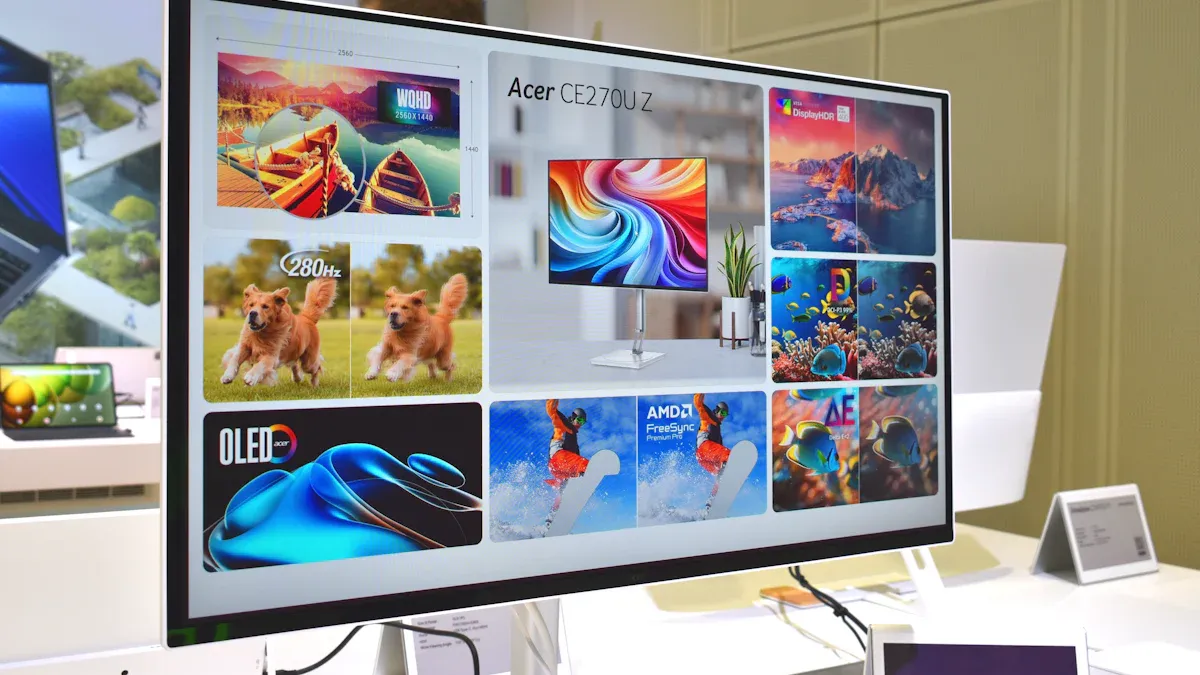
Flagship Smartphones
You see Tandem OLED technology powering some of the most advanced flagship smartphones available today. BOE’s displays set new standards for brightness, color accuracy, and durability. You experience these benefits in devices such as:
OnePlus 12, which features a 6.8-inch LTPO AMOLED display. You enjoy an A+ rating from DisplayMate, with record-setting peak brightness of 2,675 nits and the lowest screen reflectance at 4%. The color accuracy is visually indistinguishable from perfect, and the native color gamut is the largest in its class.
Honor Magic6 RSR Porsche Design, which showcases BOE’s Tandem OLED innovation. You benefit from industry-first Tandem+LTPO technology, supporting adaptive refresh rates from 1Hz to 120Hz and HDR peak brightness up to 5,000 nits.
Many users report that BOE displays rival those from other leading brands. In blind tests, you may find it difficult to distinguish between BOE and Samsung OLED screens, with positive feedback on daily use and display quality.
You gain a premium viewing experience with doubled brightness, enhanced battery life, and extended screen lifespan.
Other High-End Devices
You see Tandem OLED expanding beyond smartphones into tablets, laptops, and other premium electronics. BOE’s technology leads this transition, offering you greater durability and performance.
Huawei MatePad Pro 12.2 uses a dual-layered OLED display. You benefit from peak brightness of 2,000 nits, three times the lifespan of standard OLED, and 33% less power consumption.
Apple’s adoption of Tandem OLED in iPad Pro models drives market growth. You see the market share for tandem OLED panels in laptops and tablets rising from nearly 0% to over 30% by 2024, with further growth expected as more brands introduce OLED laptops.
BOE’s flexible OLED solutions, including rollable and wristband displays, showcase the versatility of Tandem OLED in new device categories.
Trend Description | Implication for Tandem OLED Expansion |
|---|---|
Focus on energy efficiency | Attracts premium device manufacturers |
Innovative form factors (foldable, etc.) | Drives demand in new categories |
Expansion into AR/VR, wearables | Opens new application areas |
Strategic investments by leading players | Enhances manufacturing capacity |
You witness BOE’s commitment to advancing Tandem OLED, with mass production and integration of cutting-edge technologies. You can expect to see Tandem OLED displays in more high-end devices, from tablets and laptops to wearables and industrial screens.
You witness Tandem OLED as a true breakthrough in display technology. Industry experts recognize its impact, especially for smartphones. You benefit from BOE’s leadership, which brings you high brightness, energy efficiency, and longer screen life. The IFA Gold Award for BOE UB Cell 4.0 Display highlights this innovation:
Award Name | Technology | Significance |
|---|---|---|
IFA Gold Award | BOE UB Cell 4.0 Display | Innovative features enhance image quality and eye comfort. |
You see strong market growth ahead. The global market for Tandem OLED displays is projected to reach 15 billion USD by 2035. You can trust BOE to deliver ongoing innovation and future-ready devices.
FAQ
What makes BOE Tandem OLED different from standard OLED?
You get two emission layers instead of one. This design doubles brightness and extends screen life. Each layer shares the workload, so your display stays efficient and durable.
How does BOE Tandem OLED improve battery life?
You use less power because each emission layer operates at lower intensity. This reduces overall energy consumption by up to 40%. Your device lasts longer on a single charge.
Can BOE Tandem OLED displays handle high brightness?
Yes. You experience industry-leading peak brightness up to 8000 nits. This means you see clear images even in direct sunlight. The display maintains vivid colors and deep contrast.
What advanced technologies does BOE integrate with Tandem OLED?
You benefit from LTPO for adaptive refresh rates and TADF for a wider color gamut. These technologies deliver smoother visuals and more accurate colors in your device.
Where can you find BOE Tandem OLED displays?
You see BOE Tandem OLED in flagship smartphones like the Honor Magic6 RSR Porsche Design. The technology also appears in high-end tablets and laptops, expanding to more premium devices.
See Also
Discovering The Unique Features Of BOE LED Displays In 2025
Exploring OLEDoS And Micro-LED Technologies In BOE's 2025 AR Displays
Understanding The Key Differences Between OLED And LED Displays
Unveiling BOE's Cutting-Edge Display Innovations For 2025 And Beyond
Integrating BOE's Oxide Tech With Lenovo's ThinkVision P Series Displays