What Is a Transparent Display and How Does It Work

A transparent display lets you see digital images and information while you still view objects behind the screen. You interact with content that seems to float in mid-air, which creates new possibilities for design and user experience. Unlike traditional screens, a transparent display uses special materials and technology that allow light to pass through.
Feature | Transparent Displays | Traditional Screens |
|---|---|---|
Visibility | Lets you see through while showing content | Blocks everything behind the screen |
Structural Design | Uses clear materials for light passage | Uses solid, opaque layers |
Light Emission | Each pixel creates its own light, no backlight needed | Needs a backlight |
Viewing Angles | Wide, clear views from many angles | May distort at extreme angles |
Response Time | Fast for real-time updates | Slower |
Transparency Control | You can adjust how see-through it is | Always blocks light |
Applications | Fits interactive or blended environments | Mostly for standard viewing |
You see transparent OLED displays in curved or frameless designs, which keep their function without hiding backgrounds. The transparent LCD display market shows rapid growth, rising from $1.5 billion in 2024 to $4.2 billion by 2033, with a 12.3% yearly increase. This demand highlights the unique value of transparent display technology.
Key Takeaways
Transparent displays allow you to see digital content while viewing objects behind the screen, creating a unique blend of reality and digital information.
These displays are energy-efficient, using fewer LEDs and allowing natural light to pass through, which can lower electricity costs.
Transparent OLED and LCD technologies offer different benefits, with OLEDs providing vibrant colors and flexibility, while LCDs focus on cost and brightness.
Applications of transparent displays range from retail and advertising to smart homes and medical settings, enhancing user experience and interaction.
Despite their advantages, transparent displays may face challenges like higher costs and brightness limitations, but their market is rapidly growing.
Transparent Display Overview
Definition and Key Features
You experience a transparent display as a screen that shows digital content while letting you see objects behind it. This technology creates a unique blend of the real world and digital information. You can use it in places where you want to keep an open view but still need to show important content.
Tip: Transparent displays often appear in museums, retail stores, and smart offices to create interactive and modern environments.
You find two main types of transparent displays: transparent OLED and transparent LCD. Each type offers its own strengths. OLED models provide deep colors and flexibility, while LCD versions focus on cost and brightness. You can expect high transparency, sometimes reaching up to 38%, which means you see both the content and the background clearly. Brightness levels range from 500 to 6,000 nits, so you can view the display in many lighting conditions. Many transparent displays support touch and interactive features, making them ideal for engaging experiences in public spaces.
Here is a summary of the key features:
Characteristic/Feature | Description |
|---|---|
Technology Types | Two main types: transparent OLED displays and LCD transparent displays, each with unique attributes. |
High Transparency and Visual Clarity | Achieves up to 38% transparency, allowing visibility through the screen while displaying content. |
Brightness Levels | Ranges from 500 to 6,000 nits, ensuring visibility in various lighting conditions. |
Interactive and Touch Capabilities | Many models allow user interaction, enhancing engagement in settings like galleries and shops. |
Space-Saving and Aesthetic Design | Sleek, modern design that integrates well into environments, consuming less power than traditional displays. |
You notice that transparent displays use fewer LED chips than traditional screens. This design lowers energy use and reduces heat, which means you save on electricity and cooling costs.
Comparison with Traditional Displays
When you compare transparent displays to traditional screens, you see clear differences in how they work and what they offer. Traditional displays block your view of anything behind them. Transparent displays let you see both the content and the background, which changes how you interact with your environment.
Here is a direct comparison:
Feature | Transparent Displays | Traditional Displays |
|---|---|---|
Resolution | Typically lower resolution at the same size | Higher resolution at the same size |
Brightness | Peaks at around 6,000 nits for outdoor use | Can reach extreme brightness for outdoor use |
Color Accuracy | Good color fidelity, but may vary | Excellent color accuracy |
Transparency | Up to 95% transparency | Fully opaque |
Transparent displays maintain high transparency while offering decent brightness and color fidelity.
Traditional displays excel in brightness and color accuracy but lack transparency.
You also benefit from lower power consumption with transparent displays. Their open structure means they only light up the areas needed for content, which makes them more efficient. You find that this efficiency leads to less heat and lower operating costs. While traditional displays offer higher resolution and color accuracy, they cannot provide the see-through effect that transparent displays deliver.
How Transparent LED Displays Work
LED Technology and Transparency
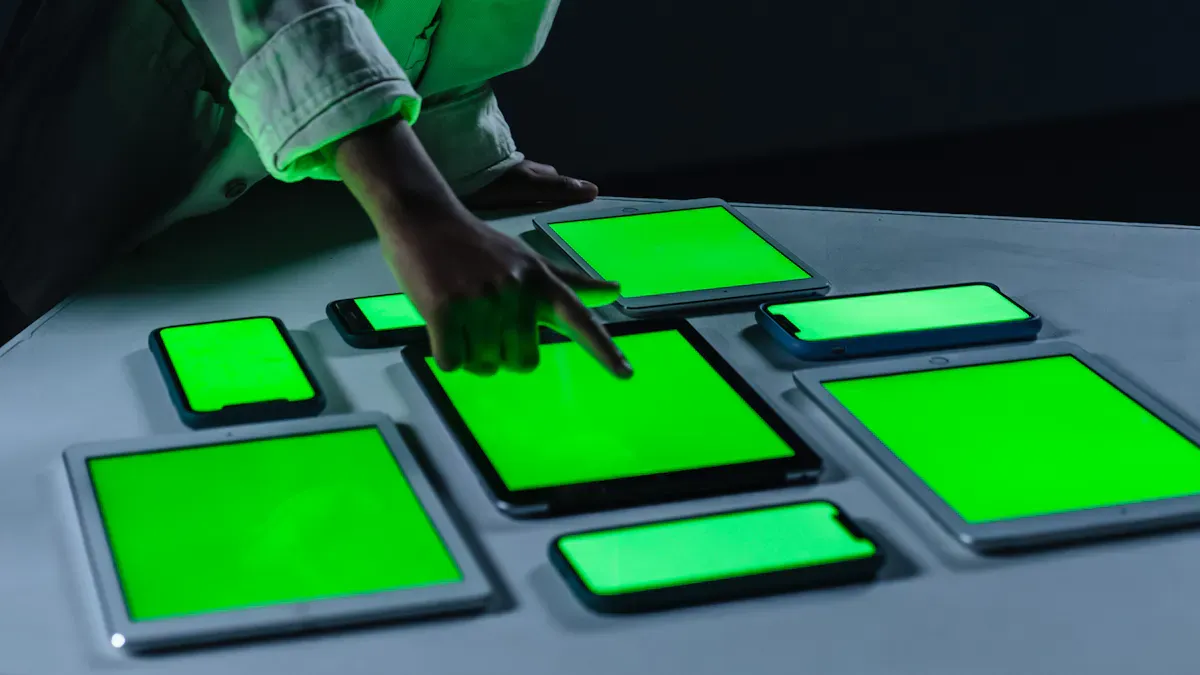
You experience transparent LED displays as a breakthrough in display technology. These displays use microscopic LED chips mounted on a transparent substrate. Each chip emits light directly, so you see digital content while still viewing the background through the screen. The transparent substrate, often made from clear glass or acrylic, supports the LED modules and allows light to pass through. This design creates a see-through effect that makes content appear to float in mid-air.
You find that transparent LED displays achieve high transparency by spacing the LED chips apart on the substrate. This spacing lets natural light and images from behind the display pass through the gaps. When you turn off the display, it looks like a clear glass panel. When you turn it on, the content becomes visible without blocking your view. You can use transparent LED panels in places where you want to blend digital information with the real world, such as storefronts, museums, or office partitions.
Tip: Transparent LED film is extremely thin and lightweight. You can apply it directly to existing glass surfaces, even on curved windows, without replacing the glass.
Here is a table that summarizes the main components and features of transparent LED displays:
Component | Description |
|---|---|
LED Modules | Tiny LED chips on a transparent substrate, available in various pixel pitches for resolution. |
Transparent PCB | Clear circuit board made from glass-like materials, ensuring stable electrical connections. |
Control System | Manages content playback and connectivity for remote updates. |
Power Supply Unit (PSU) | Converts AC to DC, ensuring stable voltage output and energy efficiency. |
Aluminum or Acrylic Frame | Provides structural support, made from lightweight materials for easy installation. |
Signal & Data Cables | Transmit data with high-speed, ensuring minimal delay. |
Protective Coating & Glass Layer | Optional features for enhanced durability and protection against dust and impact. |
You benefit from advanced micro-LED technology, which delivers high transparency and vivid colors. Transparent LED displays can reach a transparency rate of 65%, so you enjoy natural light and clear views. The color gamut covers 100% NTSC, which means you see accurate and vibrant colors. Brightness levels range from 5,000 to 8,000 nits, making the display readable even in direct sunlight. The refresh rate exceeds 3,840Hz, so you never notice flickering, even with fast-moving content.
Transparent LED displays use a thin, adhesive film that weighs only 3kg per square meter.
You can install these displays on curved or flat glass surfaces.
When the display is off, it looks like regular glass. When on, it shows content that floats in your field of view.
Contrast Ratio and Ambient Light
You notice that the performance of transparent LED displays depends on the lighting conditions around you. The contrast ratio measures how well the display shows bright whites and deep blacks. In strong light, such as direct sunlight, the contrast ratio drops, and images may look less prominent. At night, you see clearer images with more natural detail because there is less ambient light to compete with the display.
Here is a comparison of how transparent LED displays and conventional LED screens perform in different lighting conditions:
Condition | Transparent LED Displays | Conventional LED Screens |
|---|---|---|
Strong Light | Contrast diminished, less prominent images | Maintains consistent contrast ratio |
Nighttime | Images appear clearer with more natural detail | Consistent visibility and contrast |
Daytime | Requires higher brightness for visibility | Consistent performance across environments |
You can improve visibility by adjusting the brightness of the display. Modern transparent LED displays feature automatic brightness adjustment. Built-in ambient light sensors detect the amount of light in your environment and change the display’s brightness in real time. This feature helps you see content clearly, whether you are in a bright lobby or a dimly lit room.
Brightness Level (nits) | Visibility Condition |
|---|---|
5,500 - 10,000 | Direct sunlight visibility |
Up to 5,500 | Well-lit environment visibility |
Automatic brightness adjustment ensures the display remains readable throughout the day.
The system maximizes visibility by increasing output when sunlight is strong and reducing it in darker settings.
You see that transparent LED displays combine high brightness, smart sensors, and advanced materials to deliver both transparency and image quality. This balance allows you to use these displays in many environments, from outdoor advertising to indoor architectural features.
Types of Transparent Displays
Transparent LED Film
You see transparent LED film as one of the most flexible and innovative display options today. This technology uses a transparent film embedded with microscopic LEDs. You can apply transparent LED film directly onto glass surfaces, which makes it ideal for storefronts, office partitions, and even curved windows. Transparent LED film screens offer high transparency, often reaching up to 95%. You notice that transparent film LED screen products are lightweight and ultra-thin, so you can install them without heavy support structures. Transparent LED film screens also provide energy efficiency, using over 30% less power than traditional displays. You can choose from several types, including transparent film LED screen, crystal film screens, and LED mesh screens. Transparent LED film screens let you display content that appears to float in mid-air, blending seamlessly with the environment.
Note: Transparent LED film screens do not require brackets and support curved installations, giving you more design freedom.
Transparent OLED and Micro OLED
You experience transparent OLED and micro OLED displays as advanced solutions for high-quality visuals and compact designs. These displays use organic light-emitting diodes to create bright, clear images while maintaining transparency. You benefit from features like over 4,000 pixels per inch, ultra-high contrast ratios, and fast response times up to 240 Hz. Transparent OLED displays work well in applications where you need both sharp content and see-through effects, such as augmented reality headsets or smart windows. Micro OLED technology allows for even smaller, lighter displays, making them perfect for wearable devices. You get vibrant colors and perfect blacks, which enhance the content you view through these displays.
Feature | Transparent OLED & Micro OLED Displays |
|---|---|
Pixel Density | Over 4,000 PPI for sharp images |
Brightness | Up to 10,000 nits for vivid content |
Transparency | Maintains see-through effect with high image quality |
Size | Compact, ideal for headsets and smart glasses |
Other Emerging Technologies
You find new transparent display technologies entering the market, each with unique advantages. LED crystal film screens use flexible, lightweight materials and reach up to 95% transmittance. LED photoelectric glass integrates LED chips into glass, offering waterproofing and long service life. Micro LED transparent screens use smaller chips for higher brightness and lower power consumption. These displays balance transparency with high-definition content, making them suitable for both commercial and industrial uses.
Technology Type | Key Features | Advantages |
|---|---|---|
LED crystal film screens | Flexible, ultra-thin, high design freedom | Up to 95% transparency, blends with environment |
LED film screens | Transparent PCB, lens-like substrate | 70%-95% transparency, supports curved displays |
LED photoelectric glass | Integrated control systems, waterproof | Long lifespan, high-quality content |
Micro LED transparent screens | Small chips, high brightness, fast response | High-definition, energy efficient, durable |
You can select from a wide range of transparent LED displays and transparent LED film options to match your needs. Each technology offers a different balance of transparency, display quality, and installation flexibility. As you explore these choices, you see how transparent LED film and other advanced displays transform the way you present content in modern spaces.
Transparency Benefits and Challenges
Aesthetic and Design Advantages
You can transform any space with transparency. Transparent LED film gives you a modern, clean look that fits luxury retail, showrooms, and cultural spaces. You keep an unobstructed view, which means natural light fills the room and the architecture stays open. This feature is important in places where you want to blend digital content with the real world. You can use transparent displays for dynamic advertising that attracts attention without blocking the background. Designers often choose these displays because they are versatile and customizable. You can shape them to fit unique spaces, from small panels to large glass facades.
Advantage | Description |
|---|---|
Enhanced Aesthetics | You create a modern look without blocking natural light. |
Unobstructed View and Natural Light | You maintain openness and let daylight pass through. |
Dynamic Advertising | You display vibrant content that stands out but does not overwhelm the space. |
Versatile and Customizable | You fit displays to any design, from curved walls to large windows. |
Energy Efficiency and Natural Light
You benefit from transparency by saving energy and using daylight. Transparent LED film allows up to 95% of natural light to pass through, so you do not lose brightness in your space. You keep an unobstructed view while showing content, which is ideal for storefronts and office lobbies. These displays use less power than traditional digital signage. For example, transparent LED film uses only 300 to 800 watts per square meter, while older displays use over 1,000 watts. You also reduce the need for extra lighting during the day, which lowers your energy bills.
Transparent LED film keeps your space bright and open.
You save money on electricity and lighting.
You improve comfort and productivity with more daylight.
Technical Limitations
You should know about the challenges of transparency. Transparent displays have some technical limits. Transparent LCDs may show poor black images, limited brightness, and narrow viewing angles. Transparent OLEDs can lose brightness faster, discolor in sunlight, and cost more. You need to clean and protect the display from impacts and scratches. Moisture and dust can damage the electronics, so you must plan for regular maintenance. In high-traffic areas, you may need extra protection or replacement panels.
Technology Type | Limitations |
|---|---|
Transparent LCDs | Poor black images, restricted brightness, limited viewing angle, screen blur |
Transparent OLEDs | Sensitive to moisture, sunlight discoloration, faster brightness loss, costly |
You also need to consider the cost. A 5 m² transparent LED film display for a retail window can cost $3,000 to $8,000. Larger installations, like a 50 m² wall, may reach $120,000. Installation and maintenance costs depend on the method and complexity.
Applications of Transparent Displays
Retail and Advertising
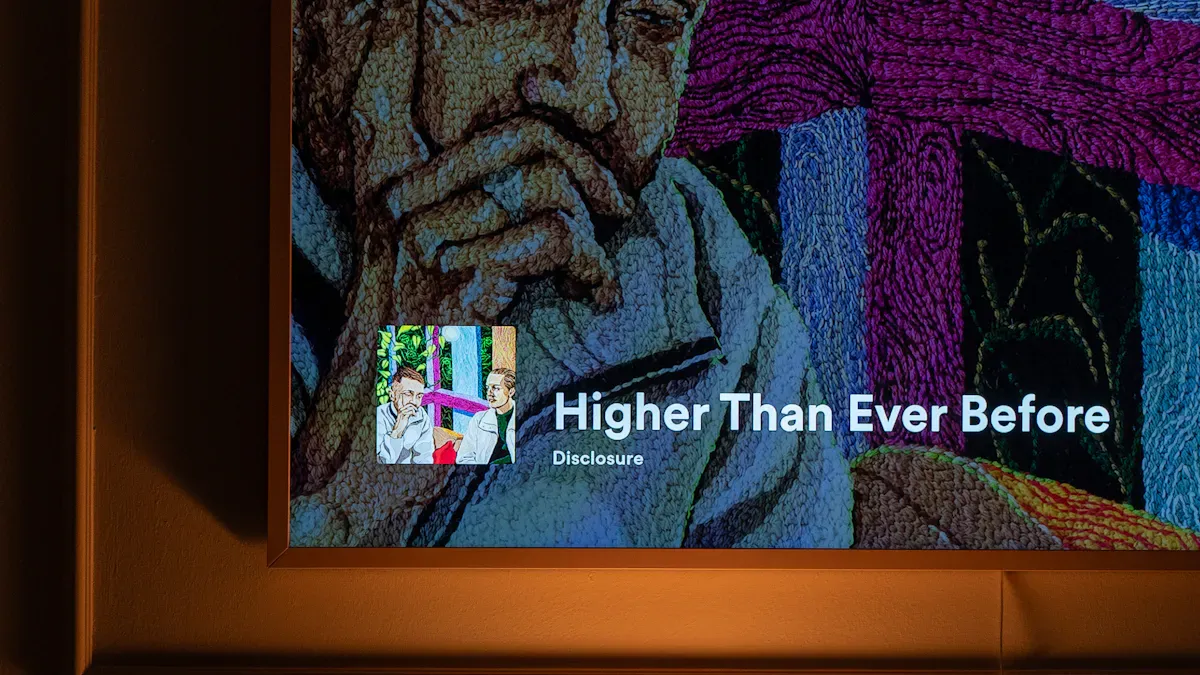
You see transparent led film transforming retail and advertising. Stores use this display to create animated visuals for seasonal campaigns. You can view dynamic content during festive periods while still seeing products behind the screen. Event marketing benefits as well. Product launches and exhibitions use transparent led film to show digital imagery without hiding the physical items. You engage with interactive features, which let you touch or gesture to explore content. This increases your dwell time and emotional connection with brands. Retailers use transparent led film to attract customers with vibrant ads that do not block the store view. You notice that these displays enhance brand image and boost foot traffic. The novelty and striking visuals of this technology grab your attention and drive sales.
Seasonal campaigns with animated visuals
Event marketing with dynamic imagery
Interactive engagement for customers
Space-efficient window and counter placements
Automotive and Transportation
You experience transparency in modern vehicles through transparent led film. Car dashboards use this display to show speed, power, and drive modes. You see information directly in your line of sight, often on the windshield. This reduces distraction and keeps your focus on the road. The display uses less energy and helps reduce cockpit clutter. Public transit systems use transparent led film to show information and entertainment on windows. You get wayfinding help in airports and stations from interactive glass walls.
Application Area | Benefit |
|---|---|
Automotive Dashboards | Transparent interfaces display navigation and safety information without obstructing your view. |
Public Transit Windows | Information and entertainment appear on windows, keeping views clear. |
Airport and Station Wayfinding | Interactive glass walls guide you without blocking visibility. |
Smart Homes and Offices
You find transparent led film useful in smart homes and offices. This display lets you see content while keeping the space open and bright. You can use it on glass dividers or windows to show promotional or informative content. In offices, transparent led film maintains sightlines, making rooms feel larger. You and your team can see each other while reviewing digital content, which improves collaboration. The display overlays digital information on real objects, creating immersive experiences.
Benefit | Description |
|---|---|
Visual Openness | You keep sightlines and make spaces feel larger. |
Enhanced Collaboration | You see team members while reviewing content, improving communication. |
Immersive Experiences | Digital information overlays real objects, enhancing context and usability. |
Industrial and Medical Uses
You see real-world applications of transparency in industry and healthcare. In factories, transparent led film helps you monitor machines and manage safety in real time. You can get remote assistance and improve productivity. In medical settings, transparent led film displays patient data and imaging overlays. Surgeons can monitor vital signs and images without looking away from the surgical field. This technology improves precision and reduces procedure times, leading to better outcomes.
Sector | Application Description |
|---|---|
Medical | Transparent screens support patient engagement, medical education, and surgical visualization. |
Industrial | You use them for real-time monitoring, safety management, and remote assistance in manufacturing and logistics. |
Tip: Reports show a 20% increase in procedural efficiency when you use transparent led film in medical environments.
You see that transparent led film and transparency offer many real-world applications. These displays change how you interact with information in daily life.
You have seen how transparent displays combine advanced technology, flexible design, and real-time interactivity. These screens offer preserved visibility, low power use, and easy installation. You may face challenges like high cost, brightness limits, and privacy concerns. The market is growing fast, with major brands investing and new uses in retail, automotive, and smart buildings. As technology improves, you can expect transparent displays to become more practical and affordable, transforming how you interact with information every day.
FAQ
What is the main difference between transparent LED and OLED displays?
You see transparent LED displays use tiny LEDs on a clear film or glass. Transparent OLED displays use organic materials that light up when powered. OLEDs offer deeper blacks and better color, while LEDs provide higher brightness and flexibility.
Can you use transparent displays outdoors?
Yes, you can use transparent displays outdoors. Choose models with high brightness (over 5,000 nits) and weather protection. Outdoor displays work well for storefronts, bus stops, and event signage.
How do you clean a transparent display?
Use a soft, lint-free cloth. Gently wipe the surface with a mild, non-abrasive cleaner. Avoid spraying liquid directly on the screen. Always follow the manufacturer's care instructions.
Are transparent displays energy efficient?
You benefit from energy savings with transparent displays. These screens use fewer LEDs and let natural light pass through. Many models consume 30% less power than traditional displays.
See Also
Exploring OLED And LED: Key Differences In Display Tech
A Deep Dive Into How Semiconductor Displays Function
Demystifying Transparent OLED Displays For All Audiences